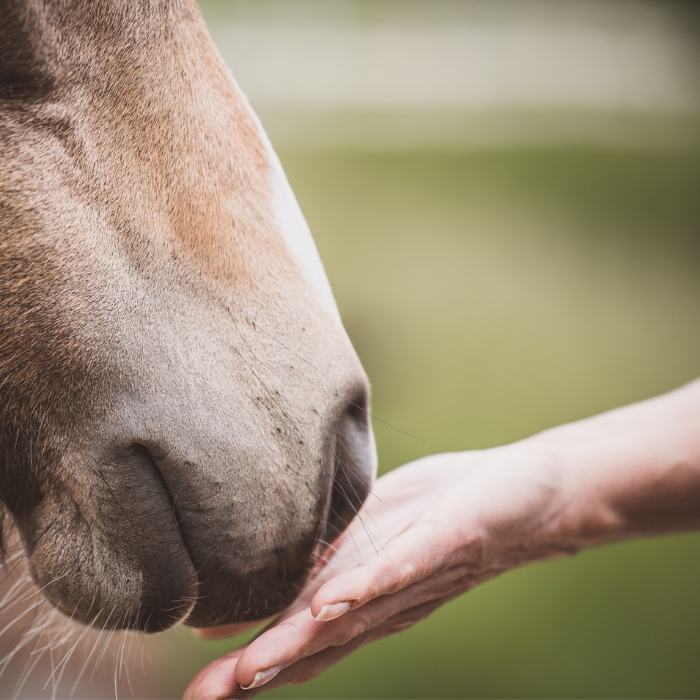
Summer coughing often develops gradually and can be easy to overlook. At first, a horse may cough only a few times at the beginning of exercise, show a mild nasal discharge, or exhibit a slight decline in performance. Many owners do not immediately suspect a serious issue, yet inflammatory processes may already be developing within the airways. This is why recurrent coughing should never be considered “normal,” even if the horse otherwise appears bright, healthy, and willing to work.
Summer Respiratory Challenges in Horses: The Most Common Triggers
The summer season can place increased strain on a horse’s respiratory system for several reasons. During this time, multiple environmental factors may irritate the airways or exacerbate existing inflammation.
In the warmer months:
- Airborne pollen levels increase.
- Dry conditions create more dust in arenas, paddocks, and pastures.
- Mold spores and organic dust become more prevalent.
- Heat and high humidity can make breathing more difficult.
- Horses often work more intensively and travel more frequently.
Many owners are surprised to learn that turnout on pasture or more open-air management is not always the solution. In some horses, symptoms actually worsen on pasture because of high pollen exposure, while others are more sensitive to stable dust or mold spores present in hay.
From a respiratory health perspective, the greatest risk often arises when several irritants are present simultaneously. A dusty riding arena, hot weather, and slightly moldy hay can easily trigger clinical signs in a horse with a sensitive respiratory system.

During the summer months, multiple environmental factors are present simultaneously that can irritate horses' airways or exacerbate existing inflammation.
Pollen, Mold Spores, and Other Allergens
During spring and summer, the overall allergen load in the environment increases significantly. In addition to pollen from flowering grasses, weeds, and other plants, large quantities of mold spores and other microscopic organic particles become airborne.
In susceptible horses, these substances can irritate the airways, trigger inflammation, and lead to excessive mucus production. In many cases, the problem does not appear suddenly but develops gradually over time.
Early signs may include:
- A few coughs at the beginning of exercise
- Mild nasal discharge
- Quicker fatigue
- A subtle decline in performance
Many horses begin coughing primarily during dry, windy weather or when exercising more intensely. In some cases, symptoms may be more pronounced while the horse is out at pasture and improve in the stable—or vice versa.
Allergy-related respiratory conditions can be particularly insidious because they often cause only mild symptoms for an extended period, while underlying airway inflammation continues to persist.
Dusty Environments and Riding Arenas
One of the most significant respiratory challenges during the summer months is dust. Dry ground, sandy footing, and indoor riding arenas can all generate large amounts of fine airborne particles that are inhaled deep into the respiratory tract.
Dust does more than mechanically irritate the airways. It frequently carries bacteria, mold spores, endotoxins, and other inflammatory substances. As a result, chronic exposure to dust can cause significant long-term damage to the respiratory system.
Particularly problematic situations include:
- Riding arenas and paddocks that are extremely dry and infrequently watered
- Poorly ventilated stables
- Intense exercise in dusty conditions
Many owners notice that their horse coughs a few times at the start of exercise and then stops. However, this is not necessarily a reassuring sign. In many cases, movement helps loosen accumulated mucus, and the horse coughs in an attempt to clear these secretions from the airways.
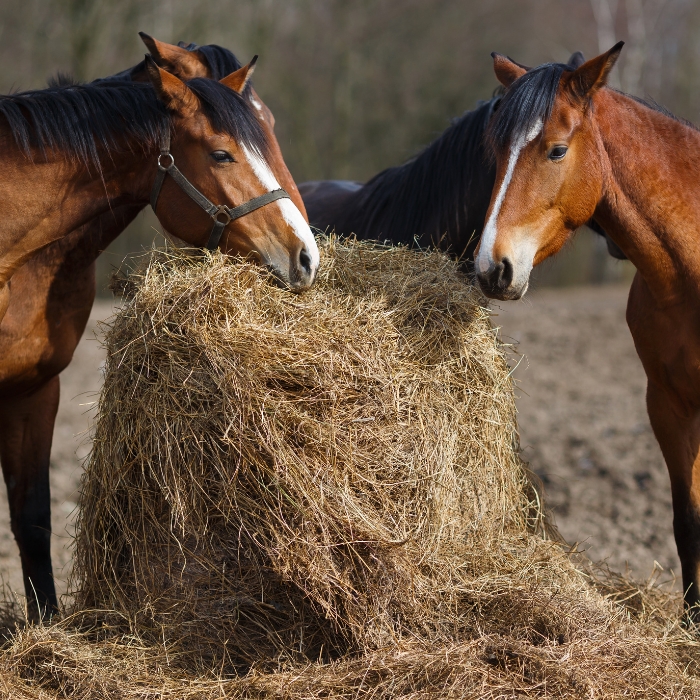
Chronic exposure to dust can cause significant long-term damage to the respiratory tract.
Dusty or Moldy Hay
Hay is one of the most significant respiratory irritants for horses. Even hay that appears to be of good quality may contain fine dust particles and mold spores capable of triggering airway inflammation in sensitive horses.
Warm, humid summer conditions promote mold growth, particularly when hay is stored improperly.
For this reason, many equine health professionals consider heaves to be largely a “disease of management,” as its development is closely linked to stabled housing, dusty environments, and the chronic inhalation of mold spores and other airborne irritants.
The following signs may indicate that forage is contributing to a horse’s respiratory problems:
- Coughing during feeding
- A musty or moldy odor coming from the hay
- Visible dust clouds when hay is handled or fed
- Symptoms that worsen while the horse is in the stable
In many cases, soaking or steaming hay can help by reducing the amount of dust and allergens inhaled by the horse. However, it is important to remember that these measures cannot compensate for poor-quality forage.
Equine Asthma – A Chronic Respiratory Disease of Horses
Conditions that were previously classified separately as COPD, RAO, or IAD are now often grouped under the umbrella term equine asthma. These disorders represent inflammatory airway diseases of varying severity, frequently influenced by environmental and allergic factors.
What Is IAD?
Inflammatory Airway Disease (IAD) is a milder form of inflammatory respiratory disease.
It is most commonly seen in:
- Younger horses
- Performance horses
- Horses in regular work and training
The defining feature of IAD is inflammation within the airways, although the airways have not yet become as severely narrowed as they do in horses with heaves.
Common clinical signs include:
- Mild coughing
- Slight reduction in performance
- Slower recovery after exercise
- Mild nasal discharge
- Increased sensitivity to dust
In many cases, the signs are so subtle that owners simply notice that:
- “The horse isn't performing quite as well as before.”
- “The horse tires more quickly.”
- “The horse occasionally coughs at the beginning of exercise.”
When identified early, IAD is often reversible. Reducing exposure to respiratory irritants and providing appropriate veterinary treatment can significantly improve the horse’s condition.
If left unaddressed, however, IAD can become a precursor to more severe chronic respiratory disease. In its early stages, the condition may still be reversible, but without treatment and appropriate environmental management, symptoms can gradually worsen and become chronic. For this reason, early recognition and intervention are essential.
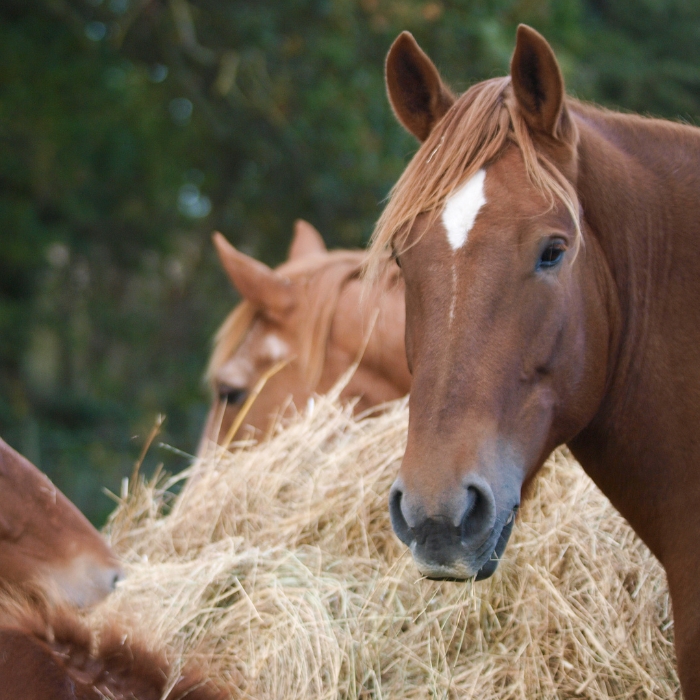
Early detection is crucial for preventing chronic respiratory conditions such as equine asthma (heaves).
What Is RAO, Commonly Known as Heaves?
Recurrent Airway Obstruction (RAO), commonly known as heaves, is one of the most common chronic respiratory diseases in horses. It is often compared to asthma in humans. In affected horses, the airways remain chronically inflamed, mucus production increases, and the bronchi become narrowed, making it increasingly difficult for the horse to breathe.
The symptoms often develop gradually and worsen over time:
- Recurrent coughing
- Labored breathing
- Wheezing
- Flaring nostrils
- Reduced performance
- Slower recovery after exercise
In more advanced cases, horses may develop a characteristic heave line—a visible enlargement of the abdominal muscles caused by the increased effort required for breathing.
What Happens in the Horse’s Body During Chronic Respiratory Disease?
One of the greatest dangers of chronic respiratory disease is that it may cause only mild symptoms for a long time while progressive damage continues within the airways.
When a horse repeatedly inhales irritants such as dust, mold spores, or ammonia, the lining of the respiratory tract can become chronically inflamed.
As a result of this ongoing inflammation:
- The airway lining becomes swollen.
- Mucus production increases.
- The muscles surrounding the bronchi become constricted.
- The airways gradually narrow.
Breathing becomes increasingly difficult and requires more effort, while the exchange of oxygen and carbon dioxide within the lungs becomes less efficient. Initially, these effects are most noticeable during exercise, but as the disease progresses, breathing difficulties may also become apparent at rest.
Over time, permanent structural changes can develop within the airways. The walls of the bronchi may thicken and undergo remodeling, altering their normal structure and function. Once these structural changes occur, some of the damage may no longer be fully reversible.
For this reason, early recognition and intervention are particularly important. Detecting and addressing respiratory disease in its initial stages offers the best opportunity to prevent long-term airway damage and preserve the horse’s respiratory health and athletic performance.
Why Is It Important to Pay Attention to the First Signs?
Many horse owners tend to think:
- “It’s just a little dust sensitivity.”
- “It will go away on its own.”
- “Every horse coughs from time to time.”
In reality, however, recurrent coughing can be a very important warning sign.
Chronic respiratory diseases rarely develop overnight. In most cases, the process unfolds gradually over months or even years, while symptoms slowly become more pronounced.
At first, you may notice only that:
- The horse coughs at the beginning of exercise.
- Recovery after work is slower than usual.
- Performance declines slightly.
However, inflammation may already be causing damage to the airways behind the scenes.
The longer this inflammatory process persists, the greater the risk that it will become chronic. Over time, the body not only continues to respond with inflammation, but the structure of the airways themselves may begin to change.
Is Recovery from a Chronic Respiratory Condition Possible?
This is one of the most important questions for any horse owner.
Inflammatory airway diseases that are identified in their early stages can often be managed successfully. With appropriate care and management, many horses are able to return to work, participate in sports, or even continue competing.
The outlook is particularly favorable when:
- The problem is recognized early.
- Exposure to dust and allergens is reduced.
- The horse receives appropriate treatment.
- Management and housing conditions are optimized.
It is important to understand, however, that complete recovery from chronic respiratory diseases—especially heaves (RAO/equine asthma)—is often not possible.
In these cases, the primary goals are:
- Controlling clinical signs
- Preventing flare-ups and disease progression
- Maintaining the horse’s quality of life over the long term
Many well-managed horses can enjoy a good quality of life for years. However, they generally remain more sensitive to environmental triggers and require ongoing attention and management to keep their respiratory condition under control.
When Should You Consult a Veterinarian?
Recurrent coughing should never be dismissed or considered a normal occurrence.
A veterinary examination is particularly important if:
The cough persists for several days.
- The horse coughs regularly during exercise.
- Wheezing or abnormal breathing sounds are present.
- The horse tires more quickly than usual.
- Performance is declining.
- Nasal discharge is also observed.
To determine the underlying cause, your veterinarian may recommend:
- A thorough physical examination
- Auscultation (listening to the lungs and airways)
- Endoscopic examination of the respiratory tract
- Bronchoalveolar lavage (BAL), commonly referred to as a “lung wash”
These diagnostic procedures can help identify the nature and severity of the airway disease and allow for the development of an appropriate treatment and management plan.
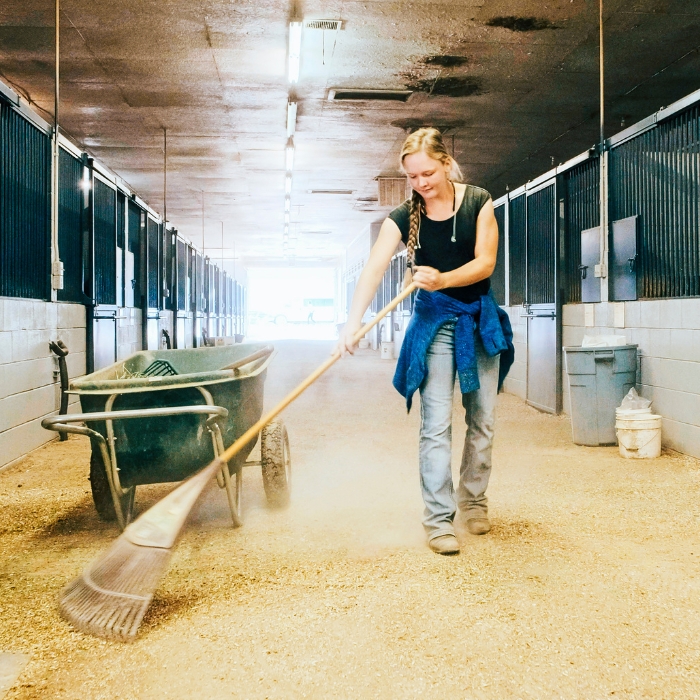
Optimizing the horse’s environment plays a crucial role in both the prevention and management of respiratory disease.
What Can We Do to Prevent Respiratory Diseases In Our Horse?
Optimizing the horse’s environment plays a crucial role in both the prevention and management of respiratory disease.
One of the primary goals is to reduce dust exposure. This can be achieved through:
- Regular watering of riding arenas and exercise areas
- Feeding high-quality hay
- Soaking or steaming hay before feeding
- Ensuring adequate stable ventilation
- Using low-dust or dust-free bedding
- Maximizing turnout and pasture access whenever possible
In most cases, proper management is just as important as medical treatment itself.
Respiratory-support supplements and herbal formulations may also serve as valuable adjuncts in the management of airway conditions. Certain herbs have been shown in research to support airway clearance, help loosen accumulated mucus, reduce airway constriction and spasms, and promote easier breathing.
The most important factors, however, are early recognition and prompt intervention. The sooner airway irritation is reduced and appropriate treatment is initiated, the greater the likelihood that the horse will remain healthy, comfortable, and capable of performing well over the long term.
Disclaimer: This article is intended for informational purposes only and does not replace veterinary examination, diagnosis, or treatment. For an accurate diagnosis and an appropriate treatment plan, always consult your veterinarian.
 Spend at least 25,000 HUF and enjoy
 For our human health products, visit our