The most common skin diseases affecting livestock and companion animals are caused by infections (bacterial, fungal, or parasitic), environmental or chemical allergens, as well as trauma and physical injuries. If not treated properly, even minor wounds can lead to serious secondary complications and significantly affect the animal’s overall health and well-being.
Wounds go through specific phases during the healing process. Understanding these stages of wound healing is essential for effectively supporting recovery and preventing complications.
The first stage of wound healing: inflammation
Duration: 24–72 hours following the injury.
In this phase, the body initiates an immediate defense response, cleansing the wound of pathogens and preparing the area for the next steps of healing.
This stage begins immediately after injury. Blood vessels briefly constrict to reduce blood loss, then dilate to allow immune cells—such as neutrophils and monocytes—to reach the wound site. Neutrophils are the first to arrive. These cells engulf and destroy pathogens that have entered the wound, including bacteria, viruses, and fungi. They are followed by monocytes, which help clear dead cell debris, support the resolution of inflammation, and prepare the area for the next phase of healing. A fibrin network formed from the blood provides both mechanical and biological support to the wound, while together with platelets it forms the initial protective closure layer (scab).
Typical symptoms:
- Local redness, warmth, and swelling (signs of inflammation)
- Mild bleeding or discharge (normal in this phase)
- Pain or discomfort
What happens if this phase does not proceed properly?
If inflammation becomes excessive or prolonged, it can delay wound healing and lead to chronic wounds or abscess formation (a localized collection of pus due to infection). An inadequate immune response may allow infections to develop, further slowing and complicating the healing process.
How Charmil wound-healing gel and spray support this phase:
- Its anti-inflammatory herbal ingredients help reduce swelling and relieve pain without suppressing the natural immune response, instead supporting it.
- Its antimicrobial and antifungal components help prevent wound infections.
- Its anti-itch properties help prevent scratching or licking, which could otherwise slow down healing.
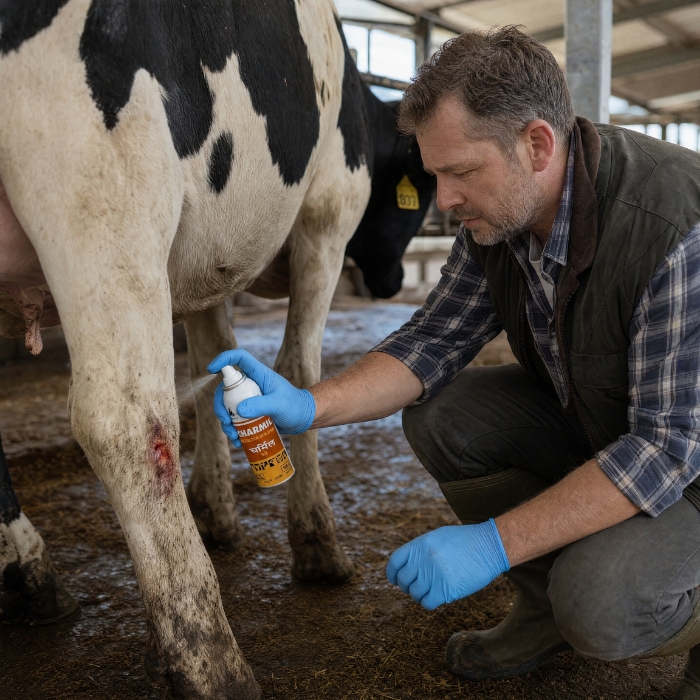
Inflammation is the first stage of wound healing, when the body defends the wound, removes pathogens, and prepares for repair.
The second stage of wound healing: proliferation (tissue formation)
Duration: 1–5 days.
In this phase, the body actively rebuilds tissue, filling the wound with new connective tissue and forming new capillaries. At the same time, the injured area gradually contracts and begins to close.
During this stage of wound healing, the body actively removes dead tissue, contaminants, and infectious material. Macrophages clear cellular debris, while various enzymes help break down necrotic tissue. In the affected area, the production of certain substances—such as hyaluronic acid—increases. This helps fill the intercellular space, stimulates the formation of new blood vessels, maintains wound moisture, prevents drying out, and supports cell migration. As a result, blood supply to the wound improves, which is essential for proper healing.
Fibroblasts migrate into the wound—cells responsible for producing the connective tissue (granulation tissue) that fills the defect. This newly formed tissue is richly supplied with tiny capillaries, giving it a characteristic pink or reddish appearance. Migrating fibroblasts appear at the wound edges and later differentiate into cells that produce collagen, a flexible protein essential for the strength and stability of new tissue.
Another cell type, the myofibroblast, helps contract the wound—reducing its size over time, bringing the edges closer together, and gradually closing the wound surface.
This phase is critical for the successful regeneration of damaged tissues.
Typical symptoms:
- Yellow tissue debris and mild discharge from the wound
- Foul odor (in case of infection)
- Red, raw wound bed
What happens if this phase does not proceed properly?
If proper wound cleansing does not occur, necrotic tissue may remain, providing a breeding ground for bacteria. This can lead to foul-smelling, infected wounds and delayed healing. In severe cases, wound infections may even develop into systemic illness, such as fever, lethargy, loss of appetite, or the spread of infection to internal organs.
How Charmil wound-healing gel and spray support this phase:
- Its antiseptic herbal compounds help keep the wound surface clean without damaging healthy tissue.
- It maintains a moist yet protected wound environment, supporting natural wound cleansing while preventing excessive drying and irritation. This promotes moist wound healing, which can accelerate recovery, reduce pain, and minimize scar formation.
- Its ingredients help reduce unpleasant odors and prevent bacterial superinfection.
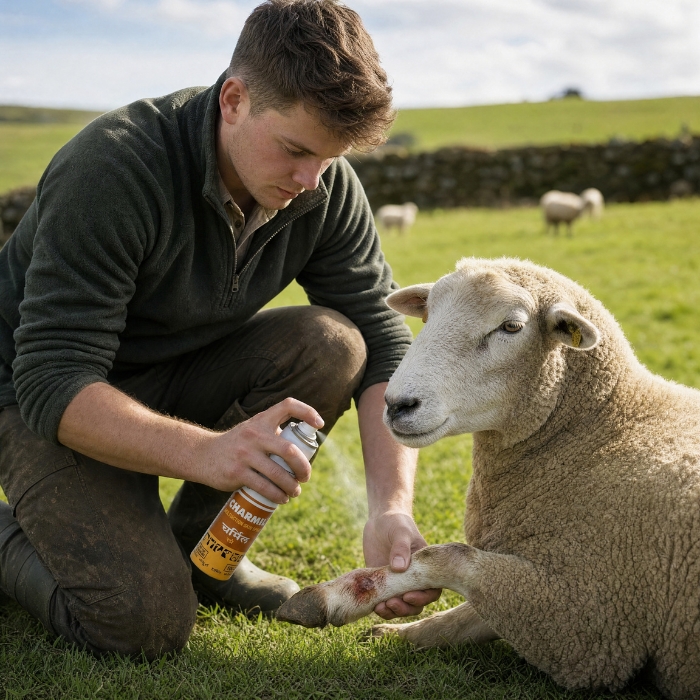
In the second stage of wound healing the body actively rebuilds the wounded tissue.
The third stage of wound healing: repair (tissue regeneration)
In this phase, tissue reconstruction begins and the new skin surface gradually strengthens.
Duration: from a few days up to several months.
This is the most active stage of healing. During the final phase of wound healing, the previously formed new tissue gradually remodels and gains strength. Newly produced collagen fibers reorganize and become denser, forming scar tissue that seals the injured area. Blood supply to the wound decreases, and actively working fibroblasts transform into more mature, resting connective tissue cells (fibrocytes). This is a natural process, as inflammation and new blood vessel formation subside at this stage.
The larger or more complex the wound, or if any disruption occurs during healing, the more visible and thicker the resulting scar may become. It is important to note that scar tissue is not a full replacement for normal skin: it lacks hair follicles, sebaceous and sweat glands, and may not fully match the original skin color. As a result, scar tissue is generally less elastic and more vulnerable than intact skin. Proper wound care is therefore essential to ensure that the scar is as functional and aesthetically minimal as possible.
The success of repair is influenced by many factors, such as the animal’s overall health, nutrient and trace element status, infections, anemia, or circulatory disorders. If these are present, healing may slow down or become incomplete.
Over time, the new skin becomes stronger and more flexible, although this process can take weeks or even months.
Signs of wound healing:
- Pink or red granulation tissue
- Gradually decreasing wound size
- Scab formation
- Scab detaching from the surface
- Smooth healed skin or scar formation
- Hair regrowth (in most cases)
What happens if this phase does not proceed properly?
If collagen production or epithelialization is disrupted (e.g., due to nutritional deficiencies, repeated trauma, or infection), healing may stagnate, the wound may reopen, or remain incomplete. Partial granulation can result in fragile, easily damaged tissue.
If tissue regeneration is not complete, the skin may remain weak, increasing the risk of re-injury or reinfection. Excessive scarring or fibrosis may also occur, potentially limiting mobility or causing cosmetic and functional impairment.
How Charmil wound-healing gel and spray support this phase:
- Its wound-healing herbal ingredients stimulate cell regeneration and support tissue repair.
- It forms a thin protective barrier over the wound, shielding it from dust, insects, and bacteria.
- It promotes faster re-epithelialization and reduces infection risk during this critical stage.
- It protects healing tissue from environmental contaminants and insects that could disrupt regeneration.
- It relieves itching, helping prevent the animal from interfering with healing through scratching or licking.
- It supports minimal scarring and better pigmentation during recovery.
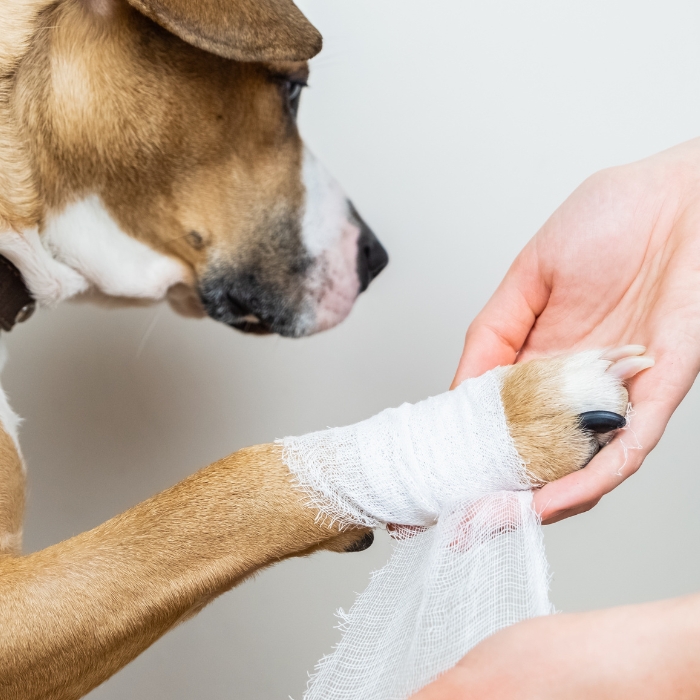
If tissue regeneration is not complete, the skin may remain weak, increasing the risk of re-injury or reinfection.
Healthy skin = healthy animal
Wound healing is not merely an aesthetic issue—if a wound does not heal properly, it can cause ongoing pain, stress, and immune system burden for the animal. In the long term, this can negatively affect overall health, reduce feed efficiency, weight gain, or milk production, and therefore directly impact productivity as well. Fast and complication-free healing thus supports not only animal welfare but also economically efficient animal husbandry.
Why is Charmil an ideal wound-healing product?
CHARMIL is a herbal, antibiotic-free wound-healing preparation developed specifically for treating injuries in livestock and companion animals. Its active ingredients have clinically proven therapeutic properties:
- antibacterial
- antifungal
- anti-inflammatory
- anti-itch
- insect-repellent components that support faster wound healing and reduce infection risk
It contains no antibiotics or synthetic substances, so resistance cannot develop, making it safe for long-term use. Thanks to its special gel and spray formulation, it is weather-resistant, well-absorbed, and easy to apply. Made from 100% natural ingredients, it is also suitable for organic farming.
It is also available in a propellant-free pump spray form, ideal for animals sensitive to the noise of traditional aerosol sprays.
Whether dealing with traumatic injuries, skin inflammation, or chronic irritation, Charmil gel and spray provides natural, comprehensive support to help animals heal quickly and without complications.
This article is for informational purposes only and does not replace veterinary examination or treatment. For accurate diagnosis and appropriate therapy, always consult your veterinarian.
 Spend at least 25,000 HUF and enjoy
 For our human health products, visit our
