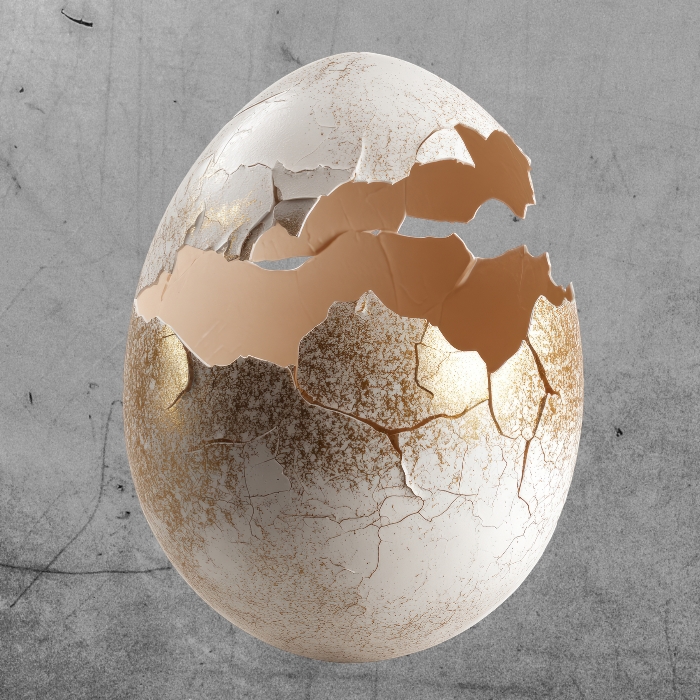
An egg is one of nature's most perfect packages: it protects and nourishes the developing embryo while allowing enough oxygen to pass through its pores. For this to happen, however, the shell must be of appropriate thickness, strength, and structure. When something falls out of balance in a laying hen's system, the issue very often appears first in eggshell quality.
What Causes Defective Shell Formation?
The eggshell consists mainly of calcium carbonate. A hen's body takes about 18–20 hours to construct the shell in the oviduct. Producing a single egg requires roughly 2 grams of calcium.
If the hen:
- does not receive enough calcium,
- ingests sufficient calcium, but her body cannot utilize it properly,
- is under stress,
- is sick,
- or is subjected to too much physical strain (intensive farming),
then shell formation can be defective.
Eggshell quality is therefore a highly sensitive indicator that informs us precisely when something is wrong with our hens.
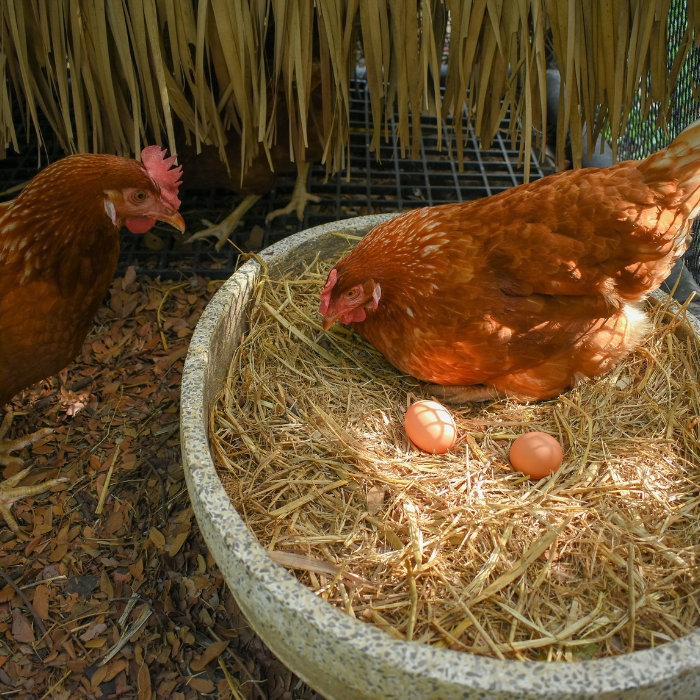
When something falls out of balance in a laying hen's system, the issue very often appears first in eggshell quality.
What Are the Most Common Eggshell Abnormalities?
1. Soft-shelled eggs
Soft-shelled eggs are among the most well-known eggshell defects. In this case, the shell does not fully form, and only a thin layer of calcium is deposited onto the eggshell membrane.
Most common causes of soft-shelled eggs are:
- Calcium deficiency.
- Vitamin D3 deficiency.
- Sudden stress.
- Extreme heat.
- Immature reproductive tract in young layers.
- Infectious bronchitis.
- High-sodium content of the drinking water.
How to prevent soft eggshells:
- Provide high-quality layer feed.
- Continuously offer hens crushed limestone or oyster shell.
- If natural light is insufficient, provide Vitamin D3 supplementation.
- Minimize stress.
- Ensure drinking water quality is suitable.
In backyard flocks, soft-shelled eggs are one of the most common issues, especially in spring when young pullets begin laying.
2. Shell-less eggs
A shell-less egg is an extreme version of a soft-shelled egg. In these cases, the hard calcified shell is almost entirely missing, held together only by the inner egg membrane. The egg feels rubbery or like a "balloon filled with water."
Possible causes of shell-less eggs are:
- Severe stress or sudden fright.
- Abrupt feed changes.
- Mycotoxin exposure and other poisonings.
- Immature shell gland in young pullets.
- Infectious diseases, such as:
- Infectious bronchitis
- Newcastle Disease (NDV)
- Avian influenza
- Egg Drop Syndrome '76 (EDS)
- Nutritional deficiencies, such as:
- Calcium deficiency
- Phosphorus deficiency
- Manganese deficiency
- Vitamin D3 deficiency
An occasional shell-less egg may occur in young layers because their egg-producing system is not yet functioning perfectly. However, if the problem occurs regularly or is observed in multiple hens at once, a more serious nutritional or veterinary issue may be behind it.
How to prevent shell-less eggs:
- Feed complete layer feed.
- Offer proper calcium and mineral supplementation.
- Provide sufficient Vitamin D3.
- Reduce stress.
- Prevent infectious diseases through vaccination and immune-boosting preparations.
3. Thin, brittle eggshells
The eggshell forms normally, but it is too thin, making it crack or break very easily.
Most common causes of britle egg-shells are:
- Long-term calcium deficiency.
- Disrupted phosphorus balance.
- Older hens.
- Overly intensive egg production.
- Heat stress.
- Feed contaminated with mycotoxins.
- High-sodium content of the drinking water.
Modern laying hybrids lay far more eggs than the ancestors of chickens ever did, so their bodies frequently "run out" of minerals.
How to prevent brittle eggshells:
- Provide adequate mineral supply.
- Provide high-quality drinking water.
- Mitigate summer heat stress.
- Feed older layers specialized feed tailored to their age.
Thin eggshells prone to cracking are an extremely common problem, particularly in commercial operations, appearing mainly as the flock ages.
Eggs with overly thin shells frequently develop microcracks that are barely visible to the naked eye. Some of these are present at laying, while others occur during collection or transport. Microcracks are dangerous because bacteria can enter the egg through them.
What causes microcracks on eggs?
- Overly thin eggshells
- Impacts (insufficiently soft bedding)
- Poor nest design
- Infrequent egg collection
- Overcrowding in the coop
To avoid microcracks, it is recommended to:
- Provide soft bedding.
- Do frequent egg collection.
- Provide proper calcium supply.
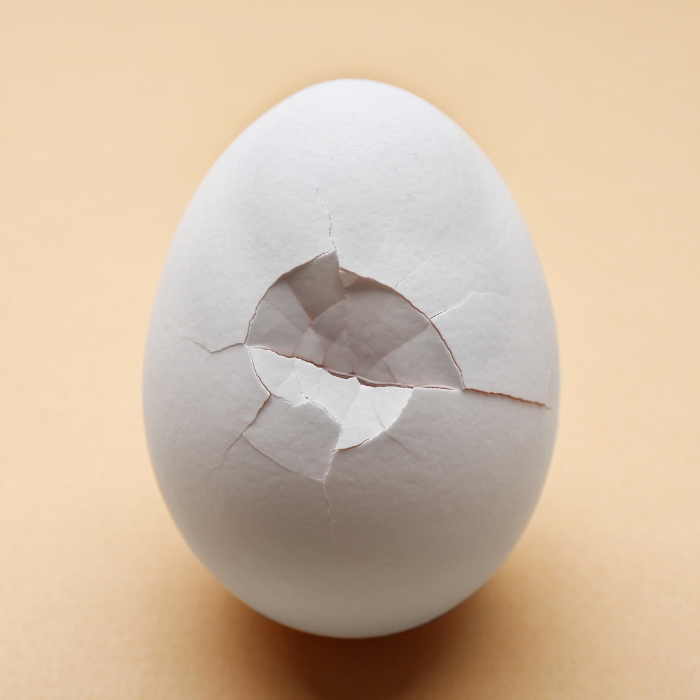
Thin eggshells prone to cracking are an extremely common problem, particularly in commercial operations, occurring mainly as the laying flock ages.
4. Bumpy, rough, chalky, or spotted eggshells
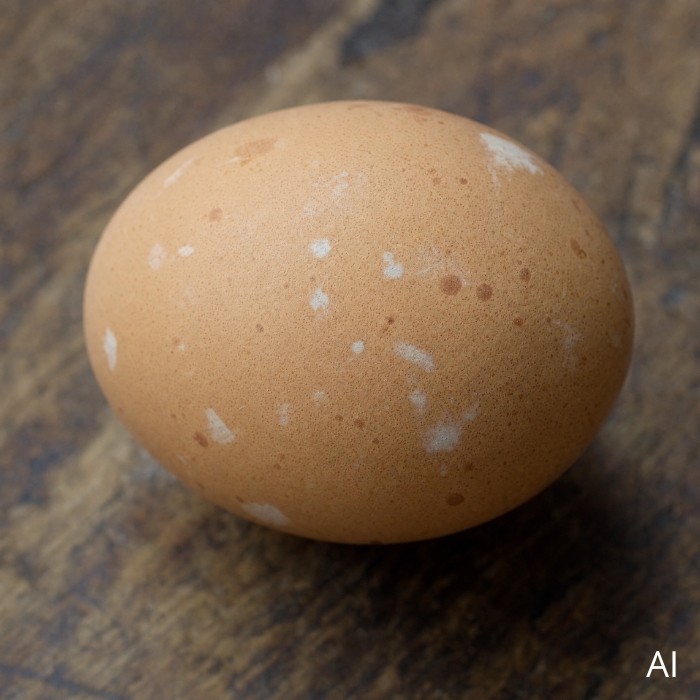
Tiny bumps, rough patches, white chalky spots/streaks, thicker calcium coatings, or brown and white spots (speckles) can appear on eggshells. The root cause is usually a disruption in calcium deposition—specifically, calcium being deposited unevenly during shell formation.
Most common variations of bumpty or spotted eggs are:
- "Pimpled" shell covered in tiny bumps.
- Calcium deposits appearing in patches.
- Eggs with a chalky calcium coating.
- Brown and white spots/speckles.
These egg-shell abnormalities can be caused by:
- Stress disrupting the calcification process.
- Older laying flocks.
- Infectious diseases.
- Excessive calcium intake.
- Genetic predisposition.
- Shell gland disorders.
How to prevent bumpy, spotted, or chalky eggshells:
- Provide a consistent feed routine.
- Ensure an ideal mineral balance.
- Create a stress-free environment.
While bumpy or spotted eggs look less appealing, they are generally safe to eat because the inside of the egg remains intact.
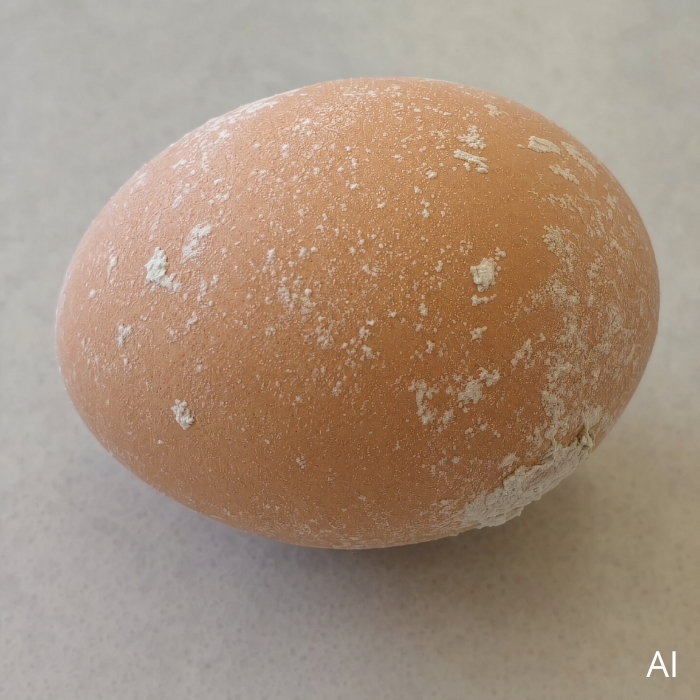
Bumpy, rough, and spotted eggshells are caused by a disruption in calcium deposition.
5. Wrinkled or corrugated eggshells
The surface of the egg appears wrinkled, ridged, or deformed.
Frequent causes of wrinkled / corrugated egg-shells are:
- Infectious bronchitis.
- Different kinds of stress (e.g., overcrowding).
- Older hens.
Such eggs are particularly common in flocks that have been swept through by a viral infection.
How to prevent wrinkled / corrugated egg-shells:
- Proper hygiene is essential.
- Vaccination and immune boosting.
- Avoiding overcrowding.
- Good coop/barn ventilation.
6. Glassy or marbled eggshells
Translucent, glass-like spots appear on the shell when held up to the light. A marbled pattern indicates structural unevenness in the shell and often signals reduced shell strength.
Causes of marbled egg-shells are:
- Excessive humidity.
- Presence of mycotoxins in feed.
- Manganese deficiency.
- Overcrowding.
7. Feces-stained eggshells
Although this phenomenon is not a classic shell formation issue, it represents a major quality problem.
Causes of feces-stained egg-shells are:
- Wet manure.
- Poor quality of the bedding.
- Digestive tract issues.
- Incomplete/poor digestion, undigested feed in manure.
- Excessively salt in drinking water.
Feces-stained eggshells increase the risk of bacterial infection. Dry bedding, clean nest boxes, and proper gut microbiome balance play a key role in preventing this issue.
8. Blood-stained eggshells
Blood appearing on the outside of the eggshell does not originate from inside the egg.
Causes of blood-stained egg-shells are:
- Young pullets (underdeveloped reproductive organs).
- Cloacal injury (difficult laying, oversized eggs, mechanical trauma).
- Vent pecking (cannibalism, stress).
- Cloacal inflammation or irritation.
- Overly rapid lighting program changes (disruption of the laying cycle).
This phenomenon is more common in commercial operations. Blood-stained shells are often the result of physical injury, but recurring cases warrant checking flock behavior and housing conditions.
Numerous problems can lie behind shell formation disorders.
What are the most Common Causes of Shell Problems?
1. Calcium deficiency
This is by far the most significant factor. Hens draw part of their required calcium from their bones. If the feed doesn't meet demand, their body starts depleting bone reserves while shell quality steadily declines. In backyard setups, relying too heavily on kitchen scraps and failing to supply complete layer feed or proper mineral supplements is a frequent error.
2. Vitamin D3 deficiency
Without Vitamin D3, calcium cannot be properly absorbed and metabolized. During winter months or under indoor housing conditions, Vitamin D3 deficiency is particularly widespread.
3. Heat stress
In summer heat, hens eat less, pant more, and experience a disrupted acid-base balance, impairing shell formation. Climate change makes heat stress an increasing challenge in Hungary and other parts of Europe as well.
4. Age
Young pullets frequently lay small or soft-shelled eggs, whereas older hens tend to lay thin, brittle eggs.
5. Infectious diseases
The most notorious diseases degrading shell quality are:
- Infectious bronchitis
- Newcastle Disease
- Egg Drop Syndrome
When these strike, shell defects are not isolated incidents—overall flock egg quality drops en masse.
6. Poor drinking water quality
Water high in salt or sodium impairs shell formation through multiple pathways. Excessively salty water disrupts mineral and fluid balance, hindering calcium incorporation into the shell, resulting in soft or thin shells.
- Excess sodium causes higher water intake and increased mineral excretion.
- A portion of the calcium cannot be properly utilized.
- Heat exacerbates this: panting reduces blood carbon dioxide levels, compounding shell formation issues.
- Salty water often causes diarrhea, leading to further mineral loss.
Providing clean, high-quality drinking water and monitoring salt levels—especially in commercial units or well-water systems—is crucial.
7. Feed contaminated with mycotoxins
Mycotoxins produced by molds can also impair shell formation. DON (deoxynivalenol), T-2 toxin, and ochratoxin play particularly damaging roles, injuring the digestive tract, impairing mineral absorption, and overburdening liver function—resulting in thin, brittle, or uneven shells.
8. Abrupt lighting program changes
Egg formation is hormonally regulated. In commercial setups, abrupt changes in lighting programmes easily disrupt the egg-laying cycle. Rapidly increasing light duration or unexpected darkness induces stress, leading to temporary shell defects, corrugated shells, or shell-less eggs.
What Are the Most Common Shell Problems in Backyard Flocks?
In backyard flocks, the vast majority of eggshell problems stem from nutritional and management inconsistencies. Because feeding often relies on kitchen leftovers, plain grain, or mixed supplements rather than complete layer feeds, mineral supply is easily disrupted.
Most frequently observed eggshell issues in backyard farming are:
- Soft-shelled eggs.
- Thin, easily breakable shells.
- Bumpy or chalky surface textures.
- Occasional shell-less eggs in young pullets.
- Cracks and microcracks.
Primary underlying causes:
- Calcium and Vitamin D3 deficiencies.
- Seasonal impacts (spring lay onset, summer heat stress).
- Flock age heterogeneity.
In backyard environments, problems typically occur in waves—such as following a heatwave or feed switch—rather than continuously.

In backyard flocks, the vast majority of eggshell problems stem from nutritional and management inconsistencies.
What Are the Most Common Shell Problems in Commercial Operations?
In commercial farming, eggshell quality issues stem far more from intensive production pressure, environmental stress, and flock-wide factors than individual feeding mistakes.
Most common eggshell issues in commercial farming are:
- Thin-shelled eggs (reduced shell strength).
- Microcracks and brittleness.
- Corrugated or deformed shells.
- Disease-linked quality degradation (e.g., infectious bronchitis).
- Stress-related temporary shell defects (e.g., after lighting or heat stress).
Critical factors in commercial systems:
- Stocking density.
- High rate of egg production.
- Precise yet delicate nutritional balance.
- Rapid potential spread of infectious diseases.
Here, problems rarely affect isolated eggs; they emerge across the entire flock simultaneously, helping distinguish management or disease causes from individual anomalies. Extreme production intensity is often the root cause: modern layers can produce up to 300 eggs annually, putting immense strain on their bodies. High stocking density also accelerates disease transmission.
Curiosities: Rare Shell Abnormalities
While most eggshell defects are well known and relatively common (e.g., thin shells, rough surfaces, cracks), there are unique anomalies that are rare yet fascinating, illustrating just how delicate shell formation is.
- Pale shells: Shell color in brown eggs becomes paler than usual. This is a pigmentation disorder, not a structural defect, and is often one of the first visible signs of flock stress.
- Pink or purplish eggs: A rare phenomenon where the shell takes on a subtle pinkish-purple hue. Causes include excessive calcium intake, disrupted interactions between the cuticle and shell layer, and stress. It is primarily cosmetic and rarely affects internal egg quality.
- White-banded eggs: A distinct white ring or band appears on the shell. During egg formation, shell deposition temporarily pauses (usually due to stress or sudden lighting changes) and then resumes, creating a "layered" effect.
- Flat-sided eggs: One side of the egg appears flattened or indented. This typically happens when two eggs are in the oviduct simultaneously, pressing against and deforming one another. It is one of the rarest yet most visually striking deformities.
- "Broken and mended" eggs: An egg partially damaged during shell formation that the hen's body "repairs" with a new layer of calcium. These eggs typically exhibit thick ridges or rough "repair lines."
- "Egg within an egg" phenomenon (rare extreme case): An extremely rare condition where an almost fully formed egg moves backward into upper sections of the oviduct and receives a second shell layer. Serious regulatory disorders or extreme stress underlie this occurrence.
- Spiral or severely deformed shells: Very rare shapes where the shell is asymmetrical, twisted, or severely distorted, usually linked to oviduct dysfunction.
- "Lace egg" (lace-like shell): An ultra-thin, delicately patterned shell with a lace-like appearance. This indicates severe mineralization or hormonal disturbances.

An occasional abnormal egg does not necessarily indicate disease, but if the problem occurs en masse or recurs repeatedly, the underlying causes must definitely be investigated.
When Should Farmers Worry about Eggshell Abnormalities?
An occasional abnormal egg does not necessarily mean disease. A hen's biological system is sensitive, and a sudden fright or heatwave can cause temporary flaws.
However, you should pay close attention if:
- Multiple hens lay unusual eggs,
- The issue persists over several days,
- Egg production drops,
- Respiratory symptoms appear,
- Egg quality deteriorates abruptly.
In these cases, an infectious disease or serious nutritional error may be the cause.
The condition of an eggshell speaks volumes about poultry health and management conditions. High-quality feed, proper mineral supplementation, clean drinking water, and a stress-free environment form the foundation of eggshell problem prevention.
This article is for informational purposes only and is not a substitute for a veterinary examination or treatment. For an accurate diagnosis and appropriate therapy, please consult your veterinarian.
Note: Illustrations marked with an AI icon in this article are images generated by artificial intelligence.
 Spend at least 25,000 HUF and enjoy
 For our human health products, visit our