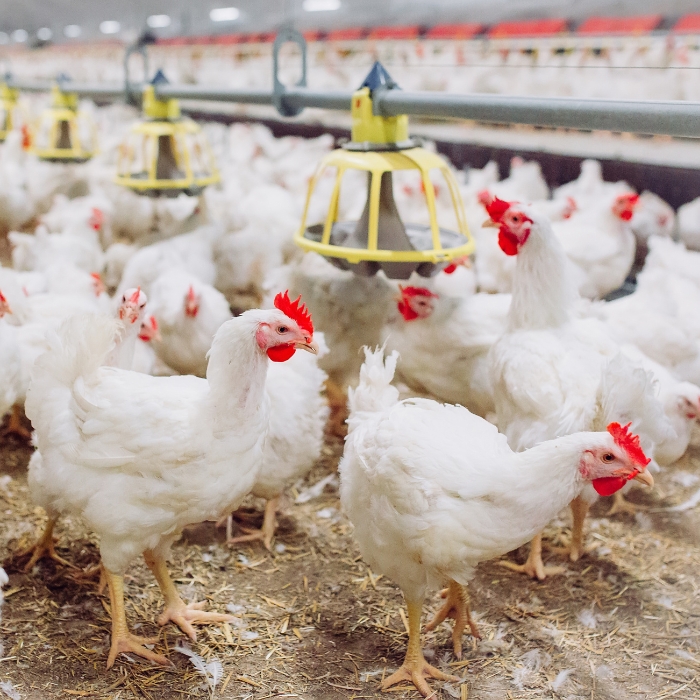
The Nature of Staphylococcosis
One of the distinguishing characteristics of Staphylococcosis is that it is not a classical, rapidly spreading epidemic disease. Staphylococcal bacteria may be present on virtually every poultry farm; however, the development of clinical disease usually requires the presence of predisposing factors or a reduction in the flock’s natural resistance. Consequently, effective control of the disease depends not only on limiting the pathogen itself, but also on maintaining the overall health status and immunological stability of the flock.
Background of Staphylococcosis
The disease is most commonly caused by Staphylococcus aureus, although Staphylococcus epidermidis and Staphylococcus hyicus may also contribute to disease development in certain cases. These bacteria are widely distributed in the environment, meaning that the risk of exposure is virtually continuous.
In young chicks, infection often occurs in a septicemic form, where the bacteria enter the bloodstream and spread to multiple organs, potentially resulting in significant mortality. In growing and adult birds, however, localized lesions are far more common, particularly those affecting the joints, tendon sheaths, and skin.
The pathogen can enter the body through several routes. Infection may occur via penetration through the eggshell, through an unhealed navel, by inhalation, or through various skin injuries. The latter route is particularly important under commercial production conditions, as poor litter quality, overcrowding, and management deficiencies can significantly increase the risk of infection.
Why Does Staphylococcosis Develop?
Scientific literature consistently emphasizes that Staphylococci rarely cause widespread disease in flocks with strong immune competence. Problems typically arise when the birds’ natural defense mechanisms become compromised.
The most important predisposing factors include immunosuppressive viral infections, such as Infectious Bursal Disease (IBD), Chicken Anemia Virus (CAV) infection, reovirus infections, and, in some cases, Marek’s disease. Additional contributing factors include stress, high humidity, overcrowding, elevated ammonia levels, nutritional deficiencies, and the presence of mycotoxins in feed.
The common denominator among these factors is their negative impact on immune function. In healthy birds, immune cells rapidly recognize and eliminate invading bacteria. However, when these defense mechanisms are impaired, even relatively low numbers of Staphylococci may multiply and cause disease.
Staphylococcal Lameness as an Economic Challenge
In broiler breeder flocks, the most common manifestation of Staphylococcosis is the form involving inflammation of the joints and associated structures. The hock joints, toe joints, and tendon sheaths are most frequently affected.
Clinical signs typically develop gradually. Mild lameness is usually observed first, followed by swelling and pain in the affected joints. Birds become increasingly reluctant to move and often spend prolonged periods sitting on their hocks. As mobility declines, feed intake decreases, body condition deteriorates, and productive performance is reduced, ultimately leading to forced culling.
In severe cases, the infection may spread to the bone marrow or vertebral column. The resulting osteomyelitis or spondylitis can lead to paralysis, rendering affected breeder birds permanently unfit for production.
For this reason, the economic impact of Staphylococcosis extends far beyond veterinary treatment costs. The loss of valuable breeding stock through culling, reduced production performance, and increased labor requirements often represent a much greater financial burden.
Field Experience from Újhartyán, Hungary
A field evaluation conducted in March 2026 at the Bro-Ker-Bét broiler breeder farm in Újhartyán, Hungary, assessed the potential of a natural drinking-water supplement to reduce Staphylococcal lameness and the associated forced culling rate.
The problem had been present on the farm for an extended period. Affected birds developed lameness and were subsequently culled. Prior to the trial, forced culling rates typically ranged between 6 and 8 birds per day. Antibiotic treatments had previously been used to manage the condition; therefore, one of the objectives of the evaluation was to assess a more cost-effective, antibiotic-free alternative.
During the trial, LIQ-BIOTIC® was administered via the drinking water at a dosage of 5 ml per 100 birds for seven consecutive days.
Results of the First Treatment Cycle
The results of the first treatment cycle were highly encouraging. The average daily number of culled birds decreased from 6.2 at baseline to 2.1, representing a 66% reduction. Improvement became noticeable within only a few days of treatment, and by the end of the administration period, culling dropped to just 0–1 birds on several consecutive days.
Following the completion of treatment, the beneficial effect persisted for a period of time. However, approximately two weeks later, culling numbers gradually began to increase again, eventually approaching their previous levels.
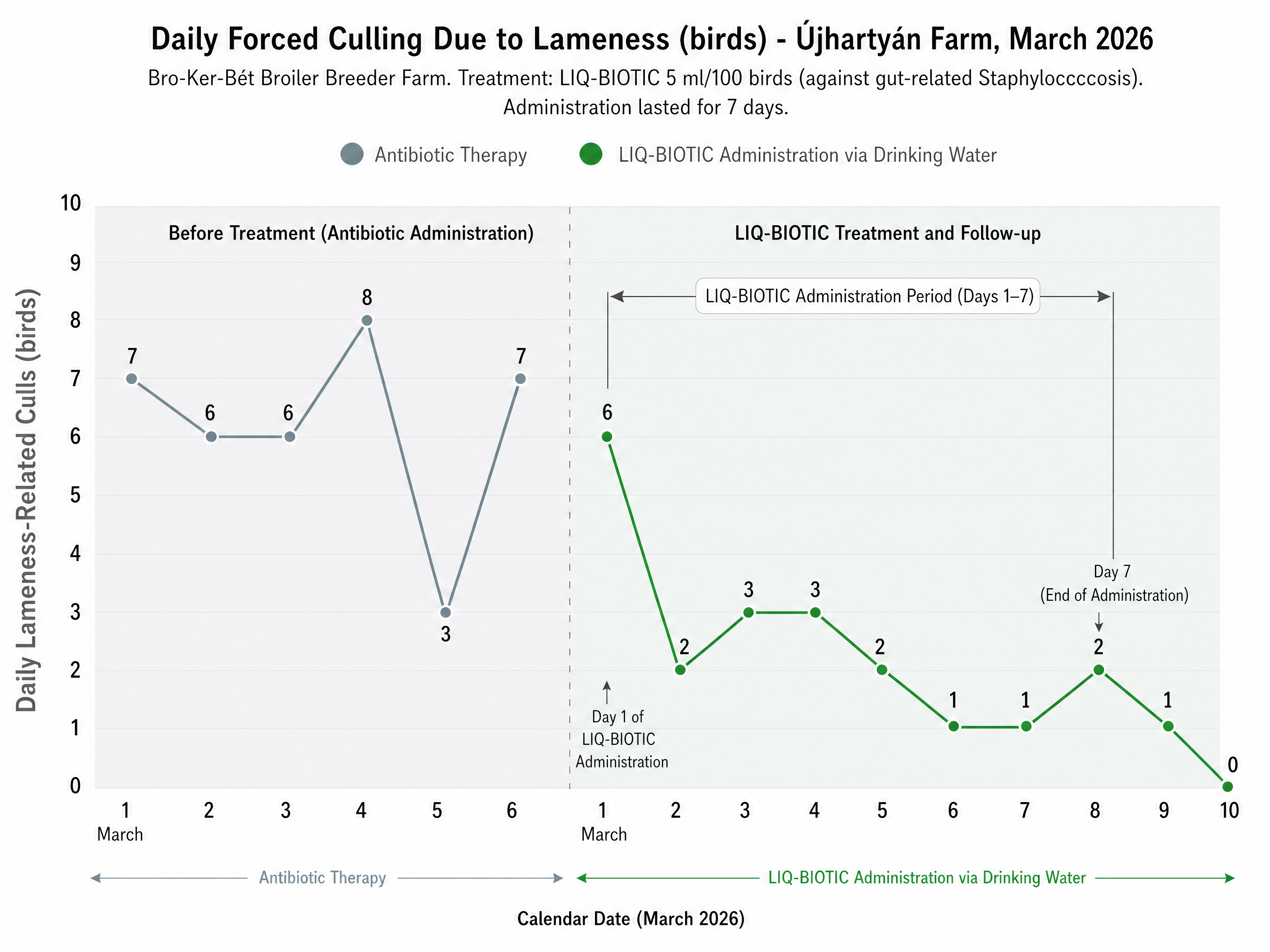
The average number of culled birds per day decreased from 6.2 at baseline to 2.1, representing a 66% improvement.
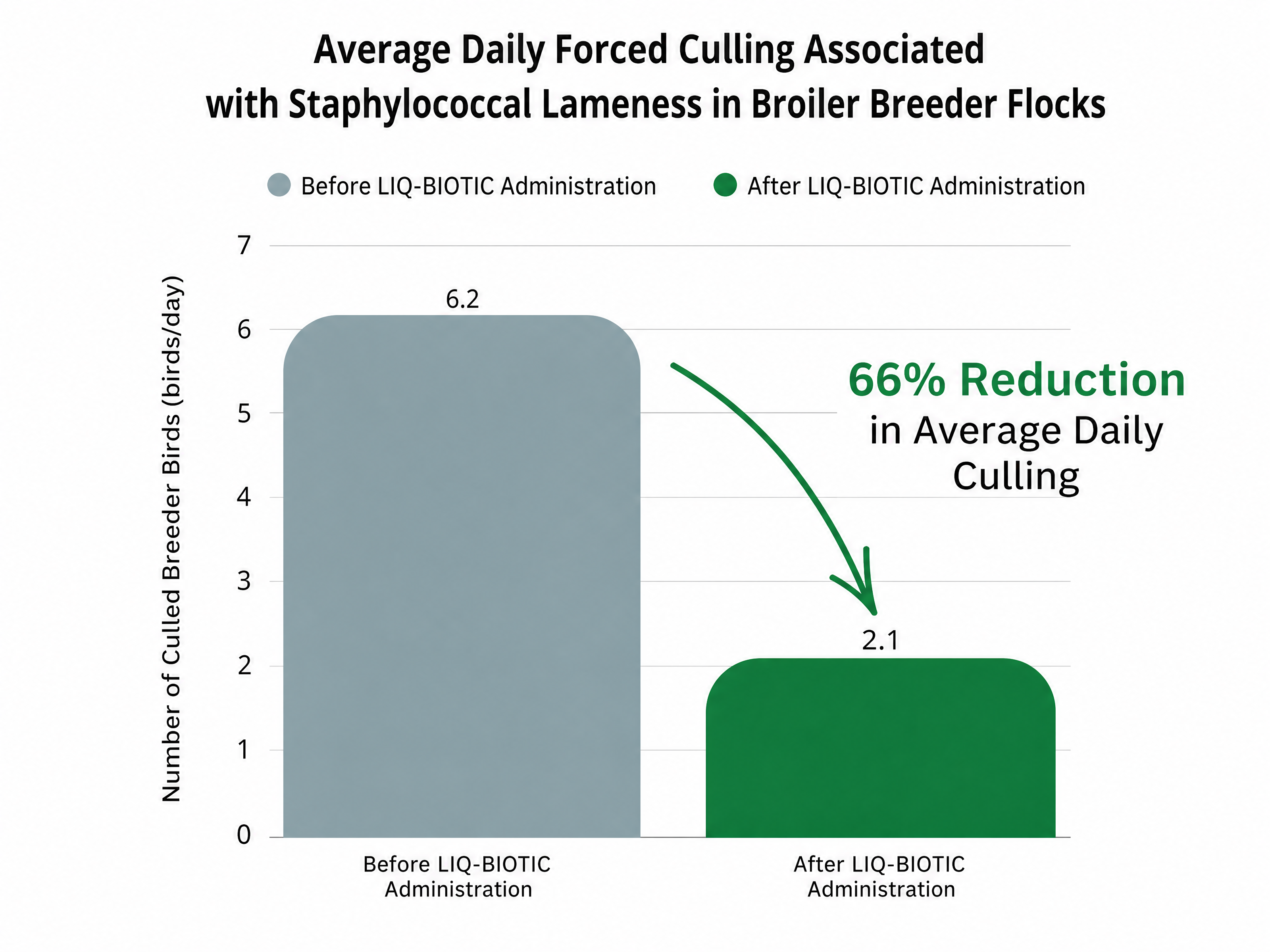
The average daily number of culls decreased by 66% following the administration of LIQ-BIOTIC via drinking water.
Results Confirmed by a Second Administration Cycle
To determine whether the observed improvement was a one-time occurrence or a reproducible effect, the evaluation was repeated.
During the second trial, weekly culling data were assessed. Prior to the initial administration period, 55 birds per week were culled due to Staphylococcal lameness. During the first week of LIQ-BIOTIC® administration, this number decreased to 26 birds, and in the following week only 11 culled birds were recorded.
A gradual increase in culling rates was observed thereafter, prompting the implementation of a second treatment cycle. Following the repeated administration, weekly culling numbers declined once again, first to 15 birds and subsequently to 10 birds per week.
Compared with the baseline level of 55 culled birds per week, the lowest recorded value of 10 birds represented an exceptional reduction of nearly 82%. These results suggest that the beneficial effect was not an isolated event, but a repeatable response observed under commercial farm conditions.
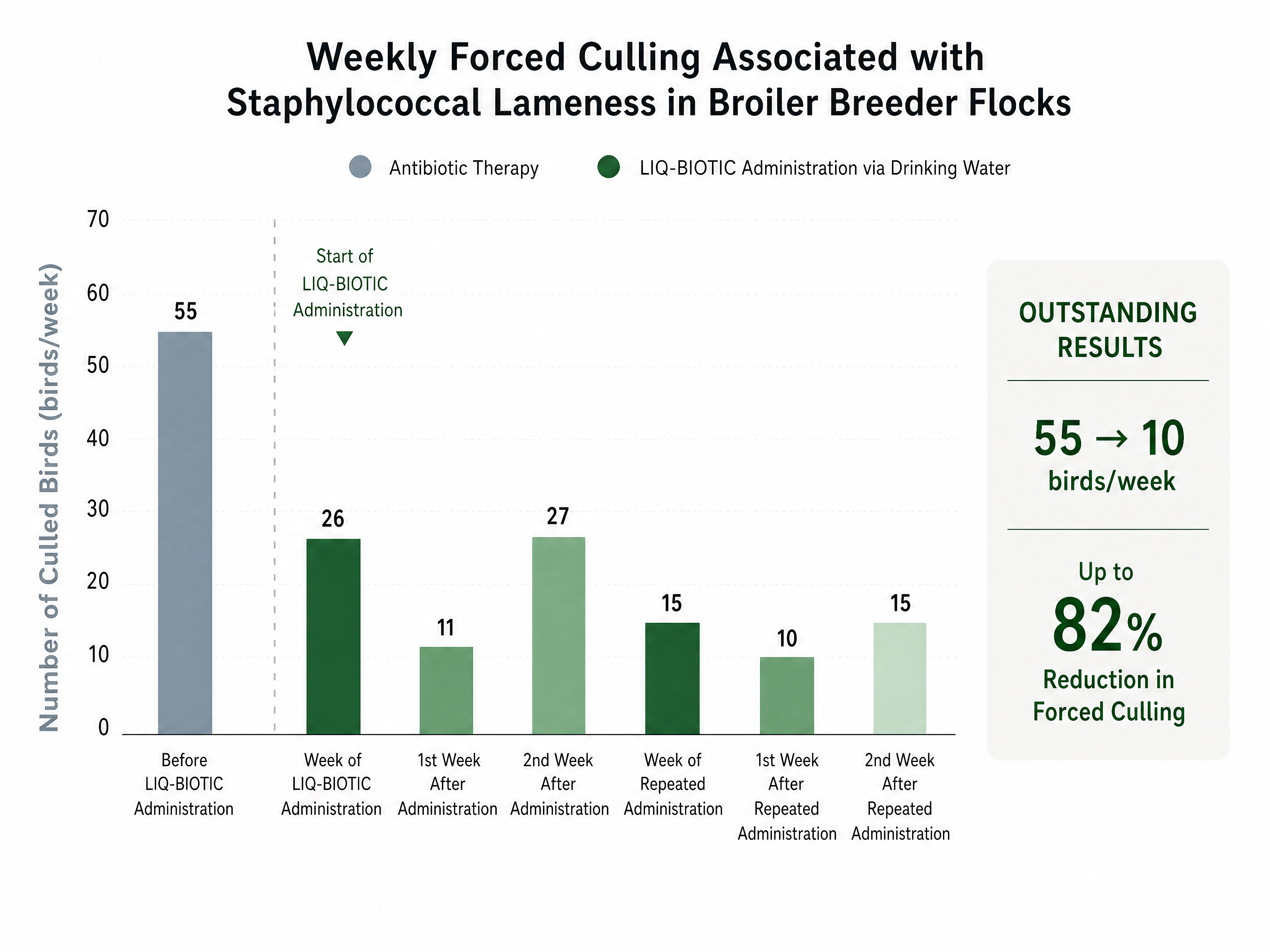
Weekly forced culling decreased by an exceptional 82%.
What Could Explain the Observed Results?
According to the scientific literature, the development of Staphylococcosis is not determined solely by the presence of the pathogen itself. Disruption of intestinal balance, increased inflammatory burden, and prolonged immune system stress are frequently involved in the underlying disease process.
Based on its mode of action, LIQ-BIOTIC® may influence several of these factors simultaneously.
The product contains antimicrobial herbal extracts and essential oils that may help reduce the virulence and biofilm-forming capacity of pathogenic bacteria. In addition, it supports the maintenance of a beneficial intestinal microbiota and may contribute to the restoration of normal digestive function.
LIQ-BIOTIC® also forms a protective layer on the intestinal mucosa, helping to preserve the integrity of the intestinal barrier. This is particularly important because a substantial proportion of the poultry immune system is associated with the gastrointestinal tract. A healthier, less inflamed intestinal lining generally provides more favorable conditions for maintaining natural immune competence.
Furthermore, the product is capable of binding and inactivating bacterial enterotoxins. Continuous exposure to these toxins can place considerable metabolic and immunological stress on animals. By reducing this burden, birds may be able to allocate more energy toward growth, production, and immune defense.
Correlation with Published Findings
The observations from the field trial are consistent with findings reported in the scientific literature. During the administration period, the number of breeder birds culled due to Staphylococcal lameness declined substantially. However, approximately two weeks after administration ceased, the problem gradually reappeared.
This may indicate that the underlying predisposing factors on the farm—such as intestinal dysbiosis, increased immune system stress, or other management- and environment-related challenges—remained present. While LIQ-BIOTIC® supported intestinal health and helped reduce pathogen pressure, culling rates associated with lameness remained at a lower level. Once administration was discontinued, these underlying unfavorable factors may have regained influence, allowing Staphylococcal problems to intensify again.
These observations are in line with the widely accepted view that the occurrence of Staphylococcosis is often not simply the result of pathogen presence alone, but is closely linked to a reduction in the flock’s overall resistance and a deterioration of gut health and immune stability.
Key Takeaways from the Field Trial
The results suggest that Staphylococcal lameness may represent the final outcome of a complex multifactorial process involving intestinal health, immune system burden, environmental stressors, and pathogen pressure.
During the Újhartyán field evaluation, the use of LIQ-BIOTIC® was associated with a 66% reduction in forced culling during the first administration cycle, while the repeated trial demonstrated a reduction of up to 82% in breeder birds culled due to Staphylococcal lameness. These findings indicate that supporting intestinal health and reducing pathogen-related challenges may positively influence the flock’s natural defense mechanisms.
For this reason, modern poultry production is placing increasing emphasis on solutions that support the biological balance of the entire flock rather than focusing solely on symptom management. In many cases, successful control of Staphylococcosis does not depend on the complete elimination of the pathogen, but rather on maintaining conditions in which birds can effectively coexist with bacteria that are naturally present in their environment.
LIQ-BIOTIC® provides natural support for achieving this objective.
 Spend at least 25,000 HUF and enjoy
 For our human health products, visit our