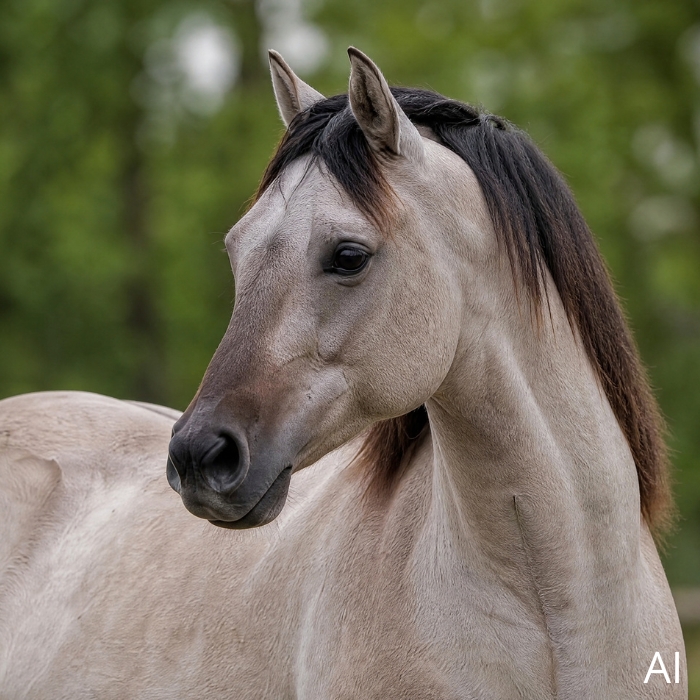
Unfortunately, at the start of the breeding season, many owners face the devastating diagnosis that their chosen stallion's semen fails to meet minimum laboratory standards. In this detailed case study, we present the results of an on-farm trial conducted in Mezőfalva, Hungary. Here, a young Quarter Horse stallion struggling with severe fertility issues achieved a radical, more than 82-fold quality improvement in functional sperm metrics—completely free of hormonal drugs or chemicals, using solely a herbal medicinal supplement.

A young Quarter Horse stallion struggling with severe semen issues successfully achieved a radical improvement in functional sperm metrics, entirely without the use of hormonal treatments.
What Determines a Breeding Stallion's Value and Fertility?
In breeding practice, a stallion's value is primarily determined by three core pillars:
- Genetic background (pedigree)
- Individual performance (show or racing records)
- Phenotypic stability and health
However, the true yardstick of economic and breeding value is the stallion's ability to achieve a high conception rate in mares, while maximizing the number of insemination doses (straws) produced from a single ejaculate.
Sperm quality in stallions is not a fixed, immutable trait; it is influenced by numerous internal and external factors:
- Age and Development: Young stallions are still growing. During this phase, their endocrine (hormonal) system is undergoing fine-tuning, and the testicular tissue has not yet reached its full adult capacity.
- The Spermatogenesis Cycle: The process of sperm development (spermatogenesis) in the testes takes approximately 57 to 60 days. This means that the impact of any intervention, stress, illness, or even a beneficial feed supplement will not appear immediately, but rather show its full effect in laboratory samples roughly 1.5 to 2 months later.
- Oxidative Stress and Nutrition: The cell membrane of spermatozoa is exceptionally rich in polyunsaturated fatty acids, making them highly vulnerable to free radicals. If the stallion's body lacks sufficient antioxidants, trace elements, and vitalizing active ingredients, the structure of the sperm becomes damaged, leading to a loss of motility and an increased ratio of dead cells.
- Environmental Factors and Stress: Transport, changing stables, training, or the psychological pressure preceding the first breeding season can elevate cortisol levels. This directly inhibits testosterone production and impairs libido.
When a young stallion presents with low cell counts and poor motility, conventional veterinary medicine often resorts to hormonal treatments. However, these can have severe drawbacks: they can disrupt the body's own internal endocrine balance and cause an even sharper decline once the treatment is discontinued. In contrast, the modern approach supports the body's natural self-healing and regulatory processes using natural antioxidants, adaptogens, and hormone-free herbal supplements.

Sperm quality in stallions is influenced by a wide range of factors.
The Mezőfalva On-Farm Trial: The Case of Dunit in Steeldust
In the spring of 2024, an on-farm trial was conducted in Mezőfalva on a 3-year-old Quarter Horse stallion named Dunit in Steeldust (Dusty), owned by Edina Csányi. Dusty was facing his very first breeding season, but the mandatory pre-breeding breeding soundness examination (andrological evaluation) yielded shocking and discouraging results.
Laboratory testing revealed that the young stallion had an extremely low sperm count. More alarmingly, the vast majority of the spermatozoa in the sample were non-viable and immotile. Based on the initial diagnosis, Dusty was practically unfit for successful natural breeding or artificial insemination, putting the entire year's breeding program at serious risk.
Rather than resorting to radical chemical or hormonal interventions, the owner and the examining veterinarian decided to use a premium-quality, natural herbal feed supplement designed to enhance sperm quality and boost libido: SEMINOGEN.

Dusty received SEMINOGEN, a premium-quality, natural, hormone-free herbal feed supplement designed to enhance sperm quality and boost libido.
Trial Parameters & Methodology
- Subject: Dunit in Steeldust (3-year-old Quarter Horse stallion)
- Duration: March 2024 – May 2024 (60-day follow-up period)
- Dosage: 15 grams per day, mixed into the evening grain feed.
- Measurement Method: Ongo CASA (Computer-Assisted Semen Analysis) system, providing objective, digital measurements through a series of tests and their weighted averages.
- Timeline: Baseline assessment before starting treatment (Day 0), followed by follow-up checks after 1 month (approx. 35 days) and 2 months (approx. 45–50 days).
What Did the Lab Results Reveal?
Measurements performed with the Ongo system precisely documented the astounding leap in Dusty's sperm quality. The table below provides an overview of his metrics across the three phases of evaluation, followed by a detailed professional assessment of each stage.
Phase 1: Baseline Condition (March 21, 2024)
The initial laboratory analysis confirmed the owner's worst fears. The analyzer evaluated three separate samples (17_1, 17_2, 17_3) to generate the official baseline report (ID: 17).
Professional Assessment: A progressive motility of 0.7% is dramatically low. This means that less than 1% of the sperm were capable of forward, goal-directed movement—the fundamental prerequisite for reaching the egg. Over 90% of the sample consisted of completely immotile, dead, or non-functional cells. With these results, the stallion would have been completely incapable of achieving pregnancy through natural breeding.
Phase 2: First Follow-Up Measurement – After One Month (April 28, 2024)
After approximately 35 days of continuous daily dosing of 15 grams, the veterinarian in Mezőfalva repeated the examination. The software captured 8 distinct fields of view to ensure precise statistics (ID: 20).
Professional Assessment: In just over a month, the change was highly visible. Total sperm concentration surged from 54.8 to 78.7 M/ml, indicating that cellular production in the testes had been intensively stimulated. Progressive motility rose from the initial 0.7% to 13.4%, while the proportion of sluggish, immotile cells dropped by nearly half (from 90.8% to 48.3%). While this showed a very encouraging trend, peak breeding condition was yet to come.
Phase 3: Second Follow-Up Measurement – The Full Breakthrough (May 5, 2024)
Although a full spermatogenesis cycle requires 60 days, Dusty's body achieved a biological breakthrough by early May, after just 45 to 50 days. The aggregated data output by the Ongo system (ID: 25) faithfully reflects this success.
Professional Assessment: This result matches the level of premium-tier breeding stallions. The proportion of goal-oriented, progressively swimming sperm reached 57.6%, and the total motility climbed to an impressive 86.4%. The ratio of unusable, dead, or immotile cells shrank to a negligible 13.6%.
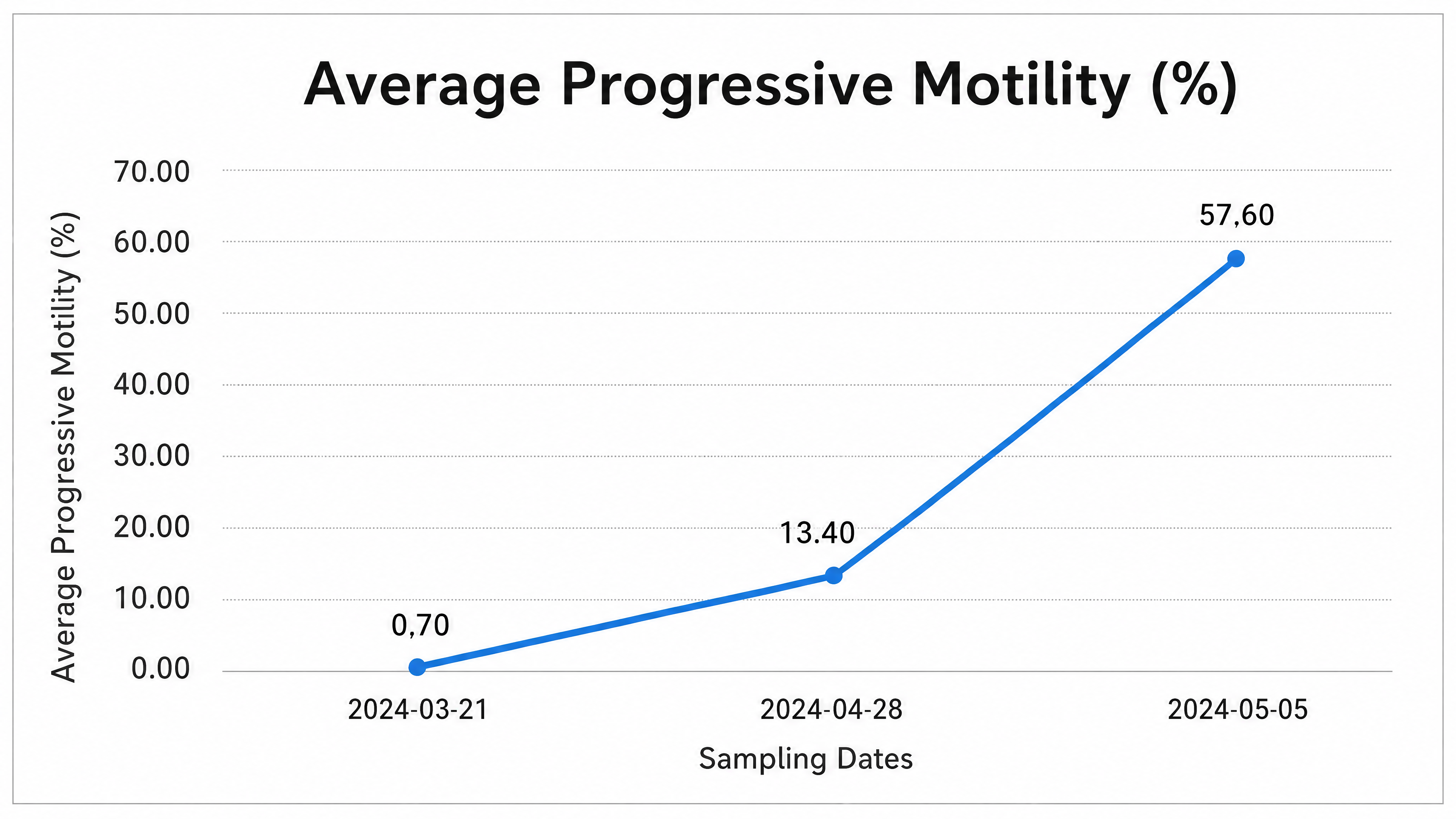
The average progressive motility metric is the key to fertilization: it represents the percentage of spermatozoa exhibiting goal-oriented, straight-line movement. This is the most critical indicator in breeding, as only these sperm are capable of reaching the egg.
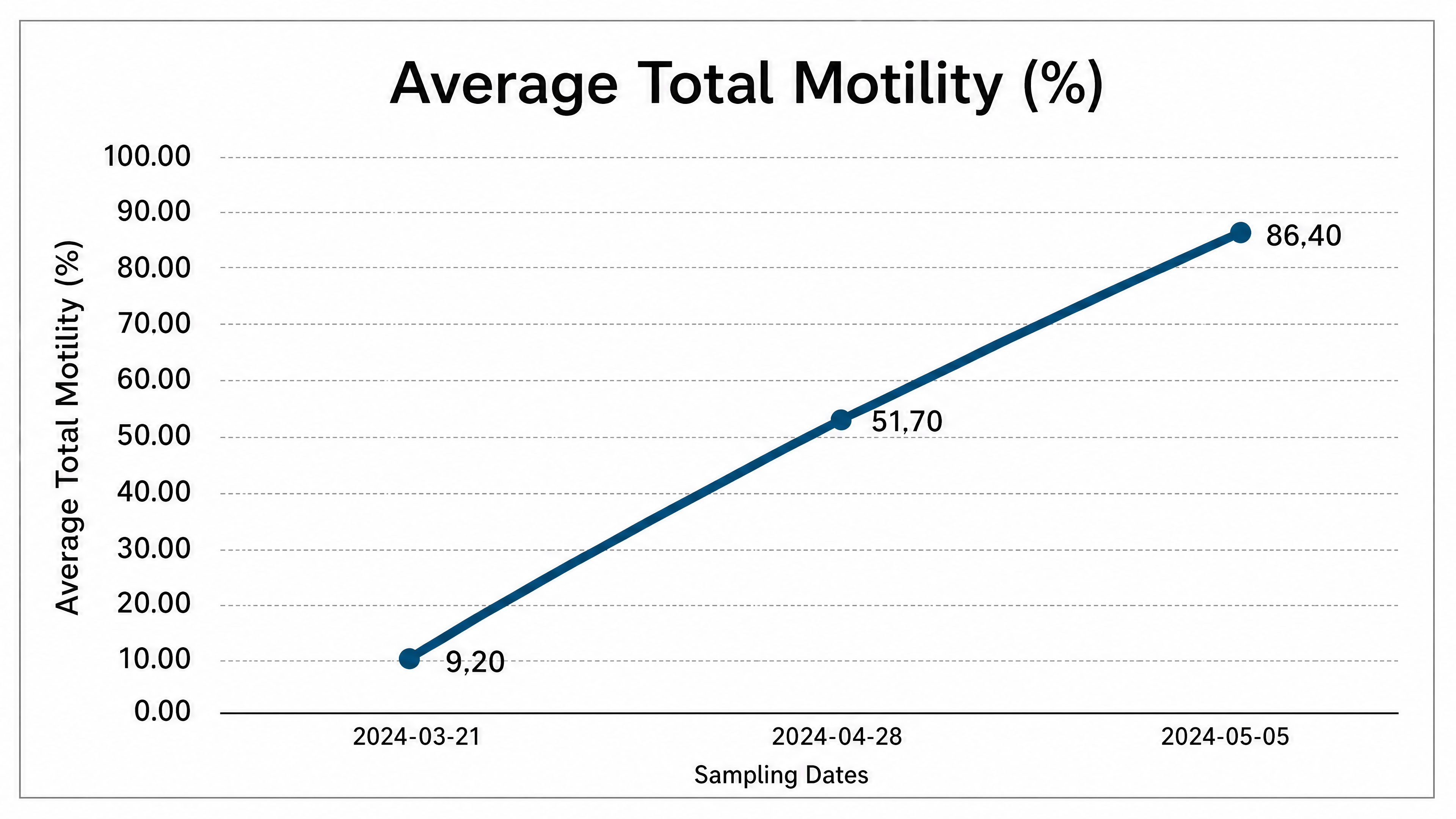
The average total motility metric represents the proportion of all living cells that exhibit any movement—ranging from those vibrating in place to those truly swimming forward. While it is the primary indicator of the sample's biological viability, it must be evaluated in conjunction with progressive motility to determine the potential for successful conception.
Quantified Summary of the Results
The statistical improvement between the March baseline and the final May results speaks for itself:
- +76.3% absolute improvement in total motile sperm: The number of active cells rose from an initial 13.3% total motility to 86.4%, meaning almost the entire sample came to life.
- Dramatic advancement in progressive motility: Forward movement—the only truly relevant metric for breeding success—increased from 0.7% to 57.6%, representing a more than 82-fold improvement in quality!
- A 76.2% reduction in the defect rate: The proportion of immotile and dead sperm dropped from 90.8% to 13.6%.
- Natural, safe mechanism of action: No synthetic hormones, chemicals, or invasive veterinary interventions were required during the trial. The stallion's body received trace elements and antioxidants that optimize testicular function from a pure, plant-based source.
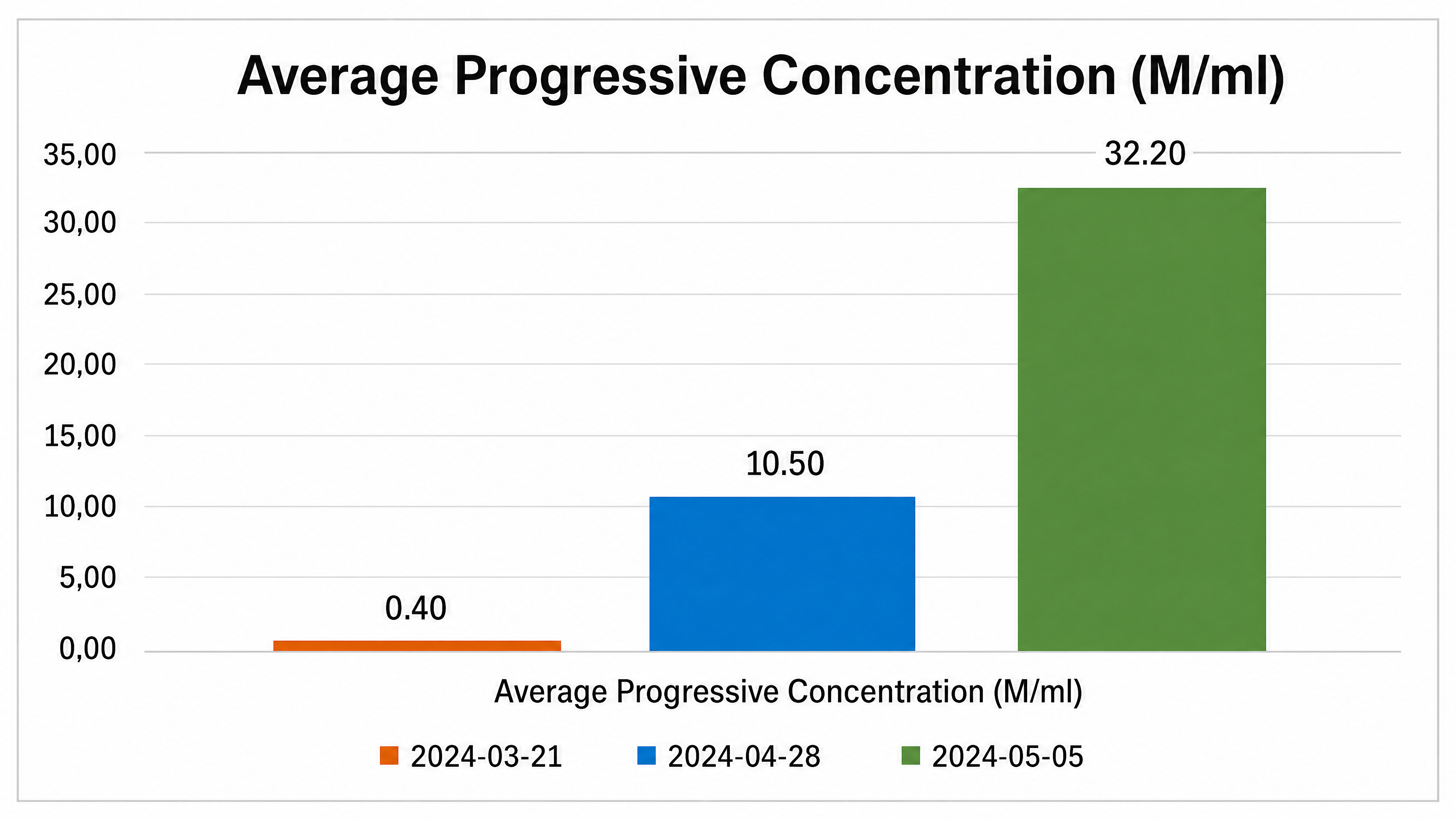
The average progressive concentration represents the number of goal-oriented, swimming cells capable of fertilization per milliliter of semen. This is the true yardstick of breeding value, directly determining how many insemination doses—sufficient for multiple mares—can be produced from a single ejaculate.
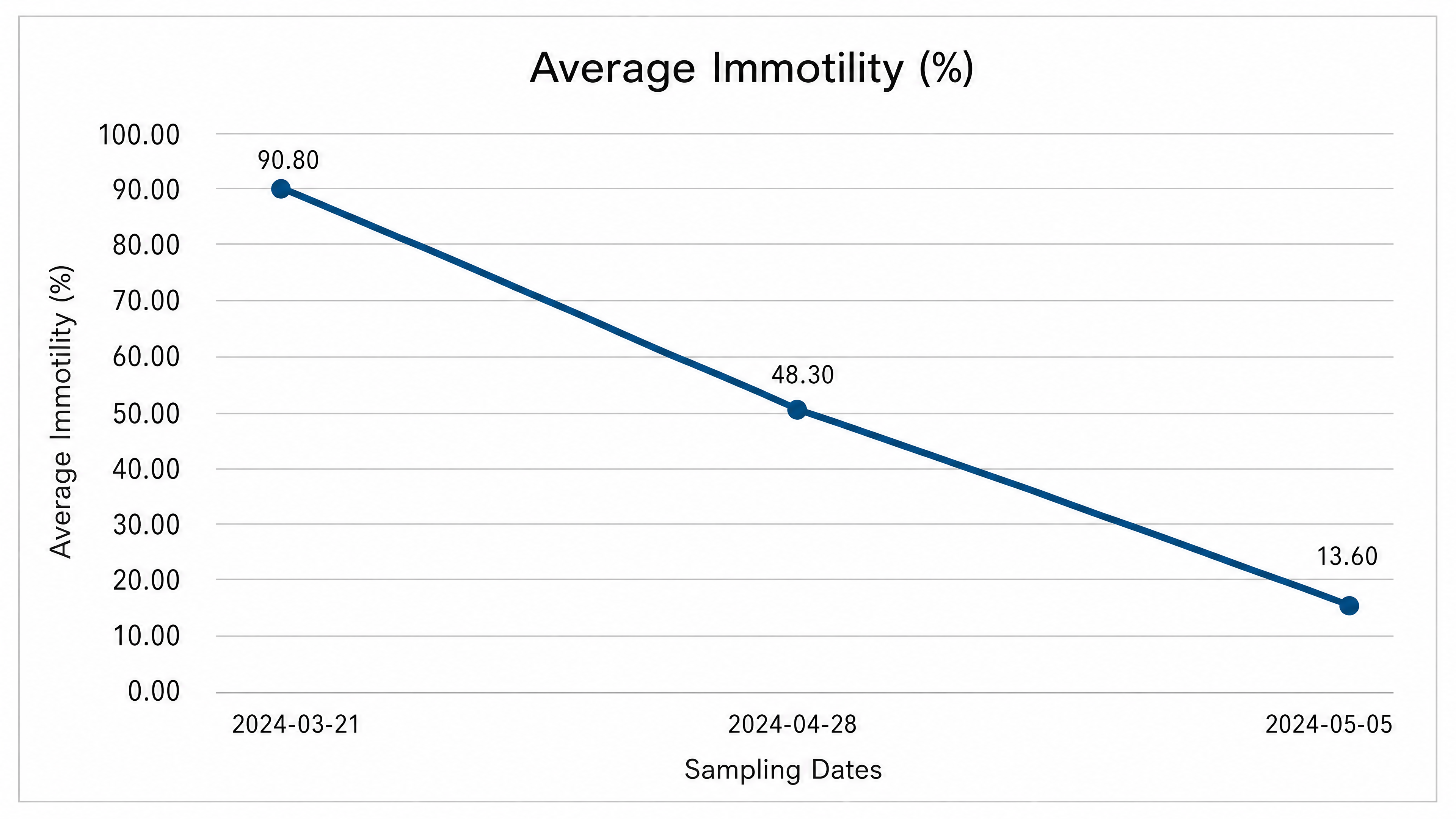
Average immotility rate (%): The proportion of non-viable, immotile cells within the sample. It is the direct inverse of total motility (the sum of the two equals 100%). The lower this number, the higher the true fertilizing value of the semen.
What Do the Sperm Concentration Results Tell Us?
It is fascinating to observe that while the concentration spiked suddenly in April (78.7 M/ml), it stabilized to a more moderate level by May (56.0 M/ml). This is a perfect example of biological fine-tuning.
In April, the stallion’s body responded to the supplement with a rapid, quantitative reaction (mass sperm production). By May, however, the focus shifted from quantity to quality: the body produced fewer but structurally flawless, highly mature sperm with outstanding motility and an exceptionally high progressive concentration (32.2 M/ml).
(Interesting note: During subsequent routine checks in June following the trial, the stallion's semen became so concentrated that without dilution, the Ongo laboratory analyzer threw a "TOO DENSE" error and was unable to count the cells—the ultimate proof of maximized sperm production.)
From the Lab to the Pasture: 15 Living Proofs
Laboratory data and microscopic images are vital for science, but horse owners are ultimately interested in just one thing: does the stallion actually produce foals?
Dusty’s case provided a resounding answer to this question as well. Following the successful regimen completed in Mezőfalva, the young Quarter Horse stallion kicked off his active breeding career. Thanks to the increased sperm count and superior progressive motility, the conception rates among mares turned out to be excellent.
At the time of writing, Dunit in Steeldust is already the proud sire of 15 healthy, vigorous foals! This is the ultimate practical proof that the laboratory improvements achieved through natural feed supplementation translate 100% into daily breeding practice.

Dunit in Steeldust is already the proud sire of 15 healthy, vigorous foals.
Conclusion: Do Not Give Up on Your Stallion Too Soon!
Dusty's story offers hope to every horse owner and breeder. If a stallion with a valuable genetic background shows poor semen analysis results before the season, one should not immediately lose hope or resort to expensive and risky hormone treatments.
Properly formulated, hormone-free natural products whose efficacy has been proven through on-farm trials prior to registration—such as the SEMINOGEN used in this study—are capable of:
- Helping the stallion's body get rid of of oxidative stress.
- Stimulating the testes' own testosterone and semen production.
- Providing the ideal microenvironment required for proper sperm maturation.
Just 15 grams / day of SEMINOGEN mixed into the feed was enough to transform a 3-year-old colt on the brink of infertility into a highly valuable, productive stallion who has already settled 15 mares.
Prepare for the next breeding season in time, and support your stallion's vitality with the power of nature!
 Spend at least 25,000 HUF and enjoy
 For our human health products, visit our