Contagious vs. Environmental Mastitis
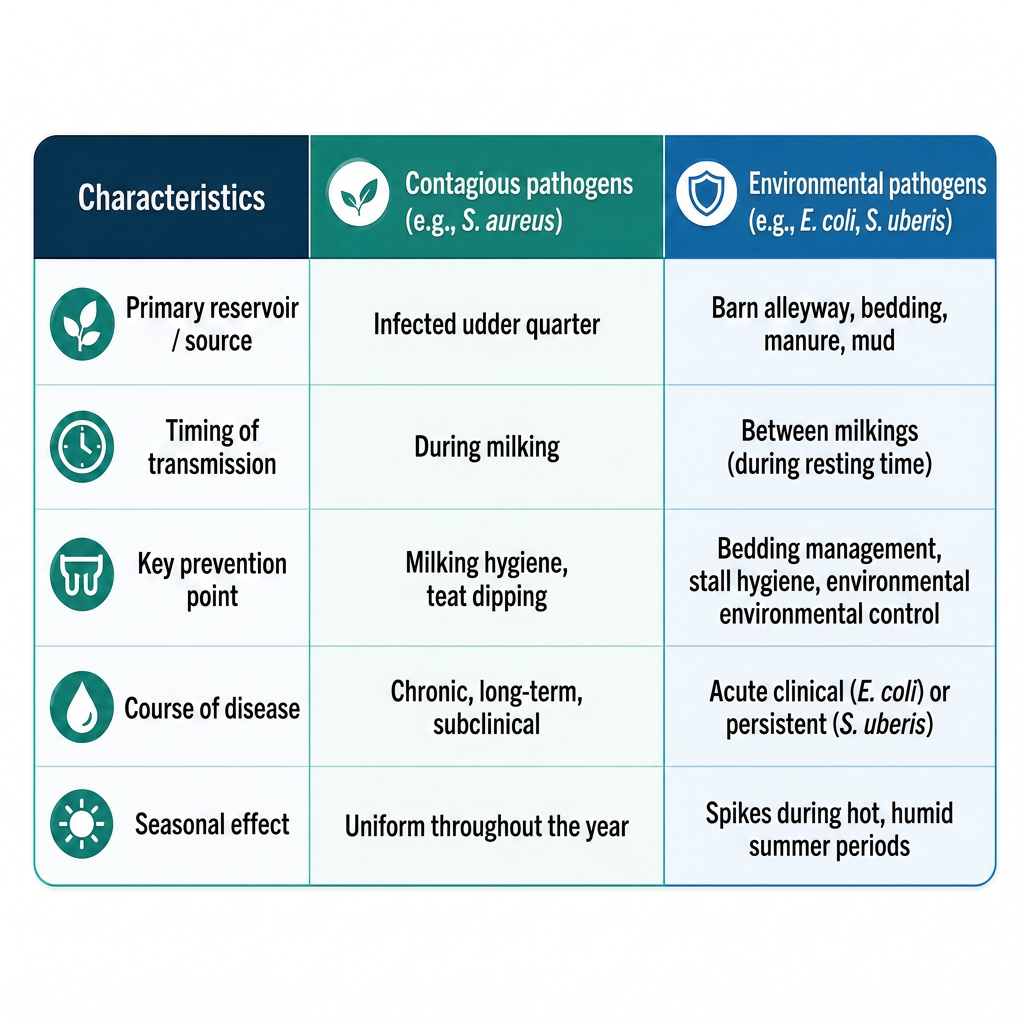
Pathogens causing mastitis are broadly divided into two main categories: contagious pathogens and environmental pathogens.
1. Contagious Pathogens (Staphylococcus aureus, Streptococcus agalactiae)
- Source: The primary reservoir of infection is the infected udder quarter itself.
- Transmission: Spread primarily during milking from cow to cow—via milking clusters, shared udder wipes, or milkers' hands.
- Course of Disease: Often cause subclinical, chronic infections resulting in persistently high somatic cell counts (SCC) while continually spreading throughout the herd.
2. Environmental Pathogens (Escherichia coli, Streptococcus uberis, Klebsiella species)
- Source: Pathogens reside in the cow's environment rather than the udder: in manure, soil, feed, water, and above all, bedding.
- Transmission: Infection occurs between milkings when the cow lies down and the teat comes into direct contact with contaminated bedding material.
- Course of Disease: Clinical symptoms vary widely. E. coli frequently causes acute, severe mastitis with systemic toxic symptoms, whereas Streptococcus uberis can cloak itself and produce chronic, difficult-to-treat infections similar to contagious bacteria.
Table 1: Contagious vs. Environmental Pathogens as Causes of Mastitis
As farms transitioned to automated milking systems or high-throughput milking parlours where teat disinfection is standard practice, the incidence of contagious mastitis fell below 10%. Today, environmental pathogens account for more than 80% of clinical cases.
Open Doors for Pathogens: What Happens After Milking?
At the end of milking, the teat sphincter muscle relaxes, and the teat canal remains open for up to 30–60 minutes. If a cow returns from the parlour and immediately lies down on bacteria-laden bedding, the teat canal acts as an open door for environmental pathogens.
Three factors are essential for microbial growth in bedding:
- Moisture (urine, leaking milk, manure, high humidity).
- Temperature (cow body heat transferred to the bedding).
- Organic Matter (nutrients that fuel bacterial growth).
When the bacterial load in bedding material exceeds (1 million colony-forming units per gram), the risk of environmental mastitis surges drastically. The goal is clear: create a bedding environment that inhibits microbial proliferation.

We must create a bedding environment that inhibits microbial growth.
Bedding Technologies: Differences and Advantages
Bedding and base preparation practices are largely dictated by regional agricultural resources (such as abundant cereal grain straw) and the farm's level of technology.
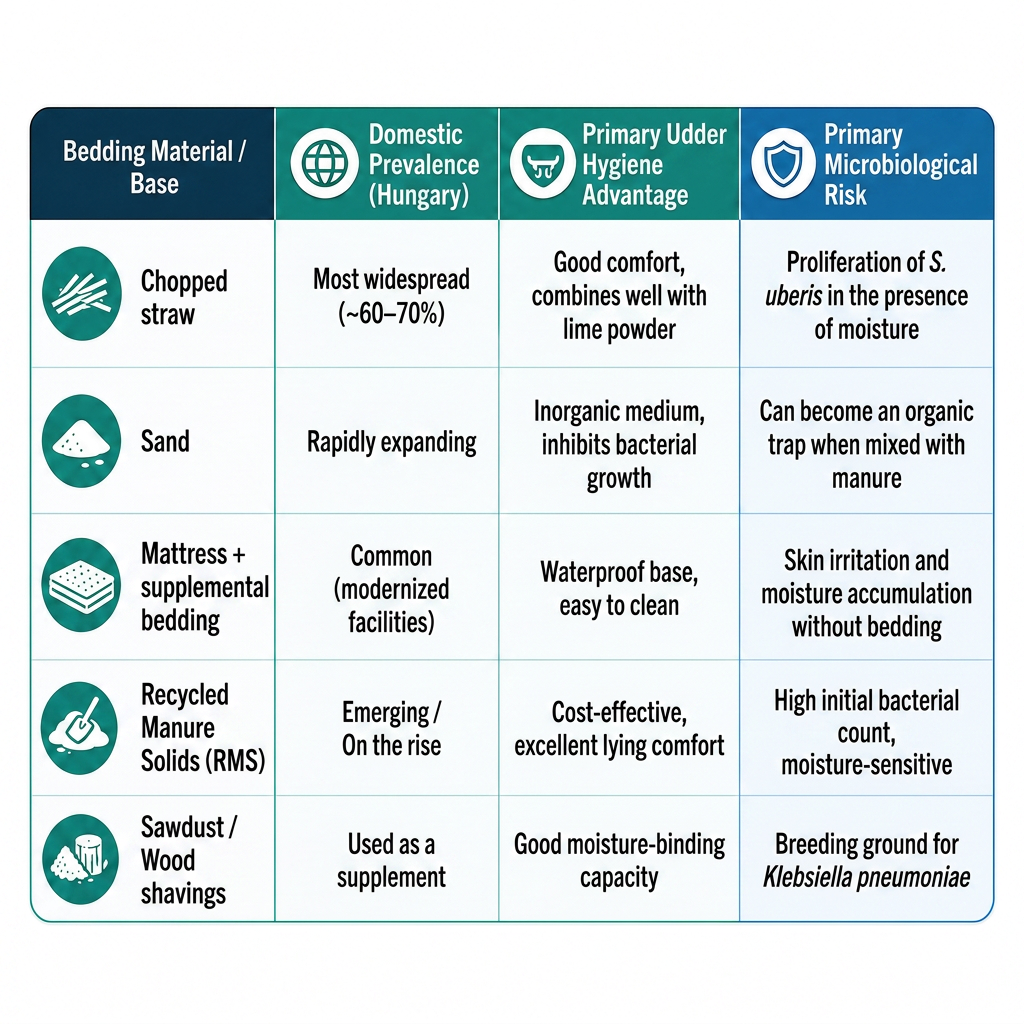
1. Straw (Wheat and Barley Straw)
Due to widespread grain production, wheat and barley straw remain the primary bedding materials, present in roughly 60–70% of farms.
- Deep-Bedded Systems (maternity, dry cows, heifers): Long straw is applied generously as a base layer, followed by daily top-ups. While an excellent thermal insulator, its organic matter combined with moisture creates an ideal breeding ground for Streptococcus uberis.
- Freestall Barns: Straw is chopped (2–5 cm). To improve udder hygiene, finely chopped straw is frequently blended with lime powder or drying conditioners.
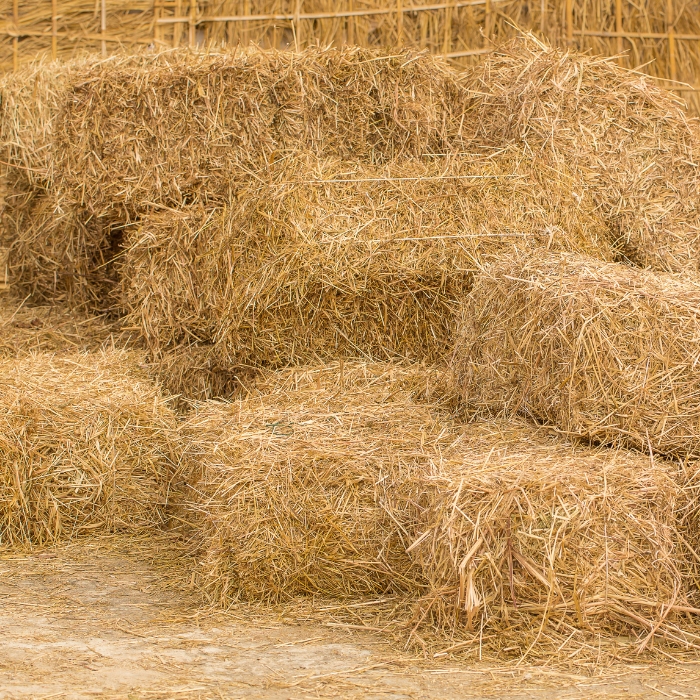
In Hungary, wheat and barley straw is the most fundamental bedding material.
2. Sand – Maximum Comfort, Minimal Bacterial Load
Sand-bedded stalls are increasingly popular in modern or renovated large-scale operations.
- Udder Hygiene Benefits: Sand is inorganic, offering no nutrients for bacteria. It dissipates heat well, conforms to the cow’s body, and prevents explosive microbial growth.
- Challenges: Sand is heavy, accelerates wear on manure scrapers and pumps, and requires specialized sand-settling lanes or recovery systems.
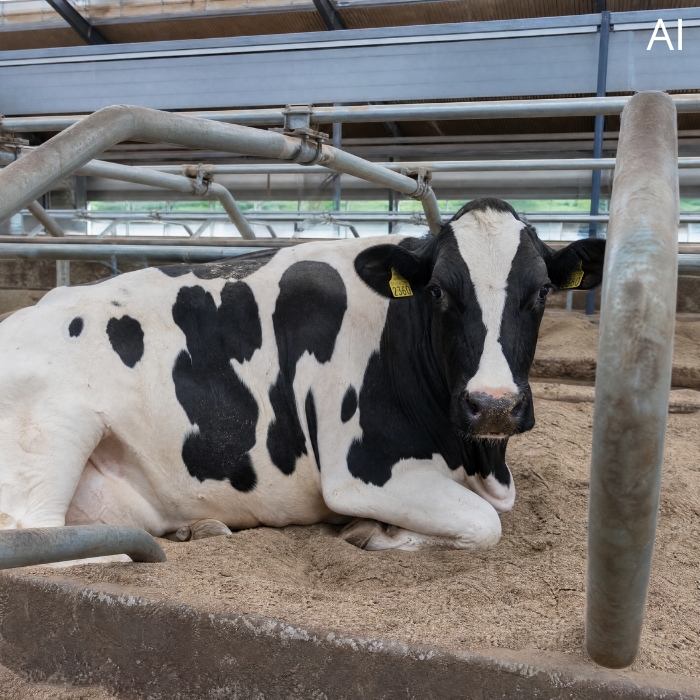
Sand inhibits the growth of pathogens and is comfortable, but it is harder to handle.
3. Freestall Mattresses + Supplemental Bedding
Where slurry handling systems cannot accommodate large volumes of straw or sand, freestall mattresses are installed.
- Structure: The core typically consists of shredded tire rubber, high-density polyurethane (PU) foam, or premium latex foam covered by a waterproof, fabric-reinforced SBR/EPDM rubber or synthetic cover.
- Udder Hygiene Role: Because the mattress surface does not absorb liquid, it is insufficient on its own. A small amount of sawdust, chopped straw, or lime powder must be applied daily to absorb leaking milk and reduce hock abrasions.
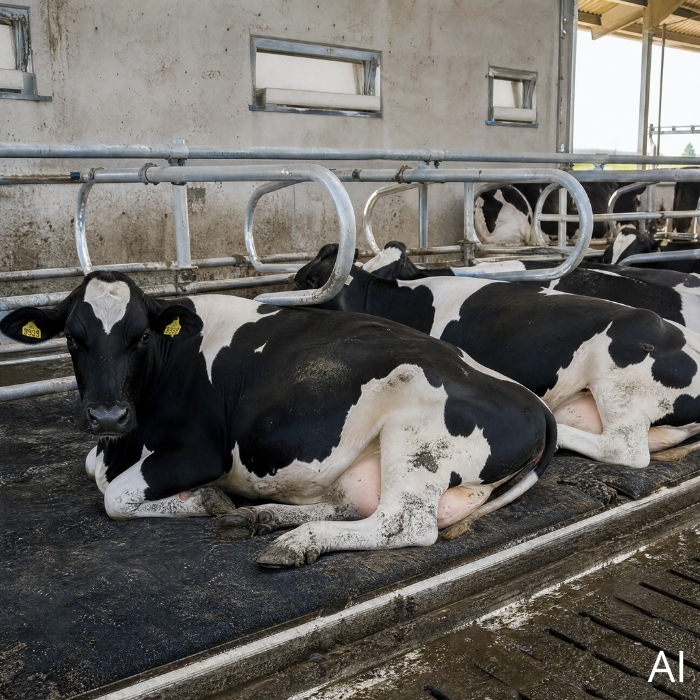
A matracos almozás is gyakori a modernizált telepeken.
4. Recycled Manure Solids (RMS) / Bio-Bedding
A growing practice among farms focusing on circular operations. The solid fraction separated mechanically from slurry is composted or dried and reused.
- Prerequisites and Risks: Only bio-bedding with high dry matter content (minimum 35–40%) should be introduced. While it eliminates bedding purchase costs, it requires strict discipline: once exposed to moisture, bacterial counts can reach critical thresholds within hours.
5. Corn Stover and Wood Shavings/Sawdust
- Corn Stover: Used primarily in deep-bedded housing for dry cows and youngstock as a base layer combined with straw.
- Sawdust / Wood Shavings: Popular in small quantities for keeping mattresses dry, but risky when used as sole bedding: the hemicellulose content in wood specifically favours the rapid growth of aggressive Klebsiella pneumoniae.
Table 2: Properties of various bedding materials
Bedding Treatment and Conditioning Technologies
Selecting the bedding material is only half the battle. Success relies on proper bedding management and modern conditioning treatments.
1. Chemical Treatment: Shifting pH (Hydrated Lime and Calcium Carbonate)
Adding hydrated lime () or finely ground limestone powder drastically increases the bedding pH (to pH 10–12).
- Effect: Most pathogenic bacteria die off or cease reproduction in an alkaline environment.
- Limitations: The effect of lime is temporary. As urine and manure dilute it, the pH drops back within 24–48 hours, allowing bacteria to recover. Excessive lime use can also dry out teat skin, causing micro-cracks.
2. Physical Treatment: Moisture Binding (Clay Minerals, Zeolites)
Moisture is bacteria's greatest ally. Clay minerals with high moisture-binding capacity (e.g., bentonite, zeolite) dry out the microenvironment, neutralizing pathogen survival conditions.
3. Biological Treatment: Probiotic Bedding Management
(Competitive Exclusion)
Recent research focuses on competitive exclusion. Rather than attempting to sterilize the bedding, beneficial, non-pathogenic bacterial strains (such as specific Bacillus species) are introduced into the stalls.
- Mechanism: Beneficial bacteria consume available nutrients and space, while producing enzymes or organic acids that inhibit the growth of E. coli and Streptococcus species.
The 5 Golden Rules of Bedding Management
Regardless of the bedding material used, adhering to these five rules is essential for minimizing environmental mastitis:
- Moisture Control: The dry matter content of bedding in the rear third of the stall (where the udder rests) must remain above 85%.
- Clean Stalls 3–4 Times Daily: Remove manure, wet bedding, and spilled milk during every milking session (or multiple times daily in robotic setups).
- Balance Volume and Comfort: Cows need to lie down 12–14 hours per day. If stalls are uncomfortable, cows will rest in the manure alley, guaranteeing severe udder contamination.
- Ventilation and Humidity Control: The barn microclimate directly impacts bedding condition. High-capacity fans used during summer heat stress cool the animals while simultaneously drying the bedding.
- Udder Hygiene Scoring: Perform routine cleanliness scoring on a scale of 1 to 4. If more than 15% of the herd shows heavy contamination on the udder or lower hind legs (scores 3 or 4), the bedding management protocol requires immediate revision.
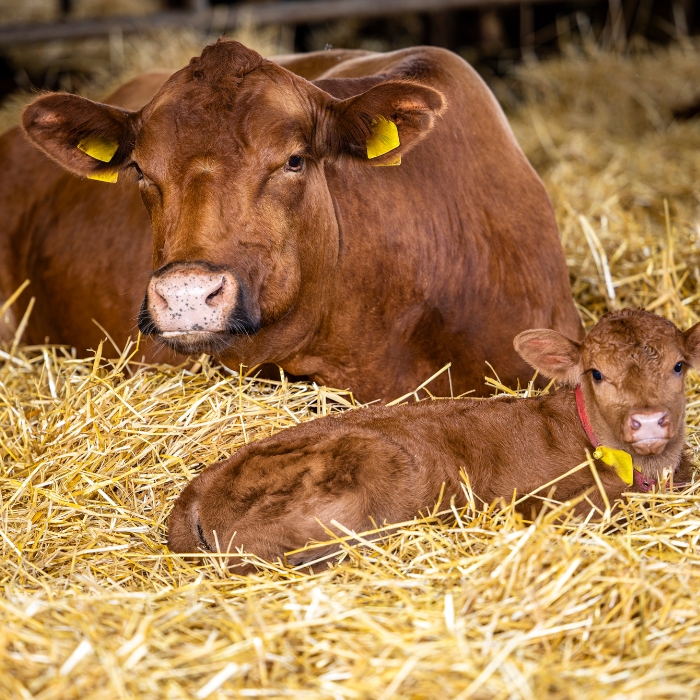
Bedding material is not merely a surface for the cow to rest on, but a highly dynamic microbiological system.
Bedding is an Investment, Not an Expense
There are no silver bullets when defending against environmental mastitis. Success relies on consistency and attention to detail. Bedding is not merely a soft surface for cows to rest on; it is a dynamic microbiological system.
By selecting the right bedding material, strictly controlling moisture, applying chemical or biological conditioners intelligently, and committing to meticulous daily barn hygiene, the incidence of environmental mastitis can be minimized. This leads to lower veterinary costs, reduced milk loss, and a longer-living, high-performing herd.
This article is for informational purposes only and is not a substitute for a veterinary examination or treatment. For an accurate diagnosis and appropriate care, please consult your veterinarian!
 Spend at least 25,000 HUF and enjoy
 For our human health products, visit our
