 Spend at least 25,000 HUF and enjoy
 For our human health products, visit our
June
02
2026
08:15
June
02
2026
08:15
Diatomaceous Earth: A Secret Weapon in the Chicken Coop and Garden
One of the most common—and most troublesome—challenges in backyard poultry keeping is the appearance of parasites. Whether it's red poultry mites or feather lice, parasites not only compromise the comfort and well-being of chickens but can also lead to serious health and economic consequences. An infested flock becomes more restless, eats less, produces fewer eggs, and may become more susceptible to disease over time.
Chemical treatments for chicken coops often come with drawbacks. Many poultry keepers are concerned about chemical residues, the development of pest resistance, or the potential impact on both their birds and the environment. It is therefore no surprise that an increasing number of farmers and hobby poultry keepers are turning to natural alternatives, such as herbal preparations and diatomaceous earth.
Diatomaceous earth is widely regarded as a simple, affordable, and effective product for maintaining hygiene in animal housing. But how effective is it in reality? Under what conditions does it work best, and what should you pay attention to when using it?
What is diatomaceous earth?
Diatomaceous earth (also known as kieselguhr) is a natural mineral material formed from the fossilized remains of microscopic algae called diatoms. These organisms lived in lakes and seas millions of years ago, and after dying, their silica-rich skeletons accumulated in thick sediment layers. Diatomaceous earth is essentially this mineral deposit, ground into a fine, flour-like powder.
What makes diatomaceous earth effective?
The effectiveness of diatomaceous earth is based on three key properties:
- Sharp, abrasive particles: Although it feels soft to the touch, diatomaceous earth consists of microscopic, glass-like particles. Under magnification, their sharp edges are clearly visible. These particles act like tiny blades that damage the outer protective layer (exoskeleton) of insects.
- Porous structure: The particles contain numerous microscopic pores, giving the material strong moisture-absorbing properties.
- Chemical inertness: Diatomaceous earth is not a poison and does not act as a neurotoxin like conventional chemical insecticides. Instead, it kills insects through physical means by dehydrating them. This makes it particularly interesting, as it is not a traditional “insecticide” but a mechanically acting substance.
Which pests can diatomaceous earth be used against in the chicken coop?
Several types of parasites may occur in poultry housing, and it is important to distinguish between them.
1. Feather lice (poultry lice)
These are among the most common parasites found in chicken coops.
Characteristics:
- they live among the feathers
- they do not suck blood, but feed on skin flakes and feather material
- their presence causes constant itching
- they damage and weaken the plumage
Symptoms in affected chickens:
- excessive preening and scratching
- restlessness
- patchy feather loss or thinning plumage
2. Red poultry mite (Northern fowl mite / red mite)
A blood-sucking parasite that can cause significant economic damage in poultry flocks.
Characteristics:
- active at night
- feeds on blood
- hides in cracks and crevices of the coop during the day
In severe infestations:
- causes continuous stress and anemia
- may lead to mortality
- significantly reduces egg production
Diatomaceous earth can be used against both types of parasites, but it is only truly effective against red mites when the entire coop is thoroughly treated as well.
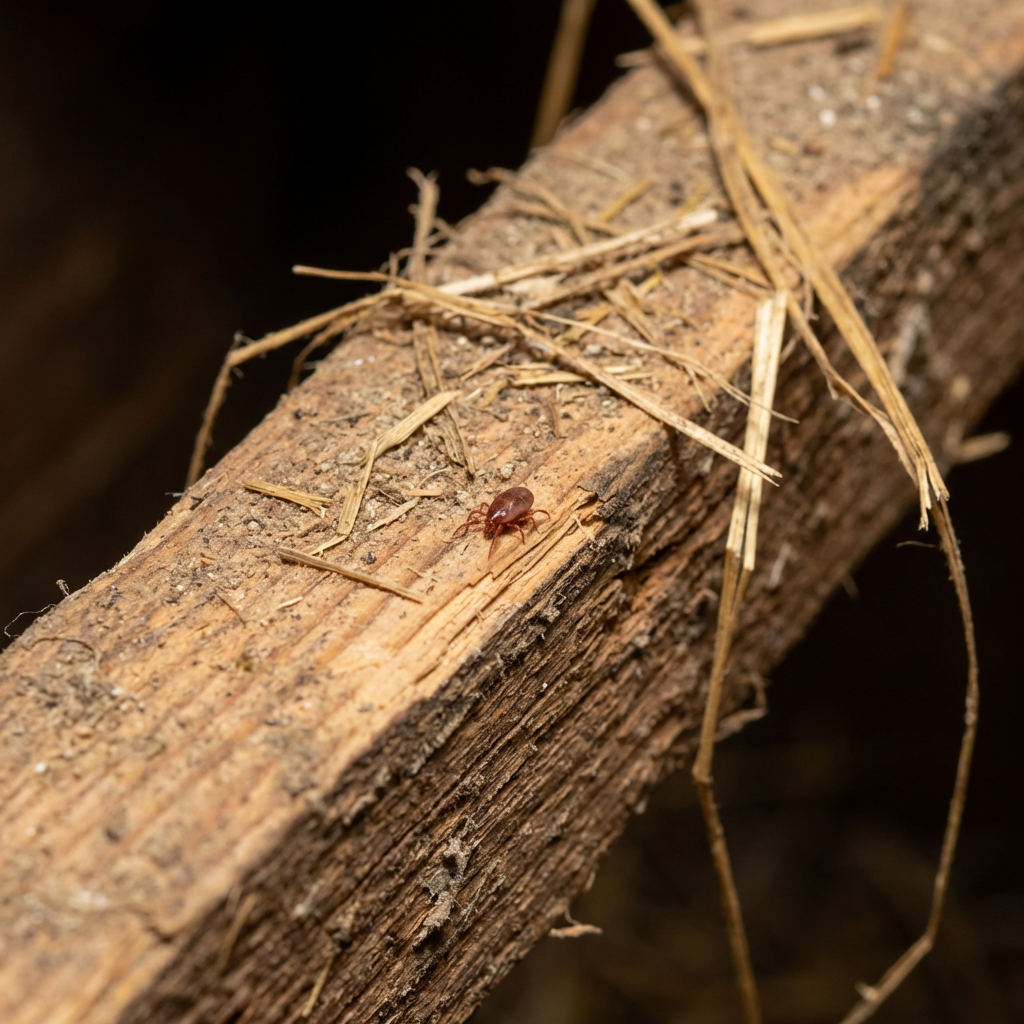
Diatomaceous earth can also be a useful and natural aid in cases of red poultry mite infestations.
How Does Diatomaceous Earth Work Against Parasites?
The mode of action of diatomaceous earth is fundamentally different from that of conventional insecticides.
1. Damage to the exoskeleton of pests
Insects and mites are protected by a thin, waxy outer layer that helps prevent dehydration. The particles of diatomaceous earth disrupt this protective coating, creating microscopic abrasions on the surface and thereby compromising the pests’ natural defense barrier.
2. Dehydration
Once this protective layer is damaged, moisture begins to escape from the insect’s body. As a result of this dehydration process, the pests eventually die.
Diatomaceous earth uses its sharp particles to create tiny cuts in the insects’ chitinous exoskeleton, causing them to dehydrate and eventually die.
Why Is Diatomaceous Earth Preferable to Chemical Insecticides?
Using diatomaceous earth offers several advantages:
- It does not place a burden on the environment, which is particularly important in backyard settings where other animals and small children may also be present.
- It does not act as a poison; when used while wearing a protective mask, its application is considered safe.
- No resistance develops against it, meaning it remains equally effective in the long term.
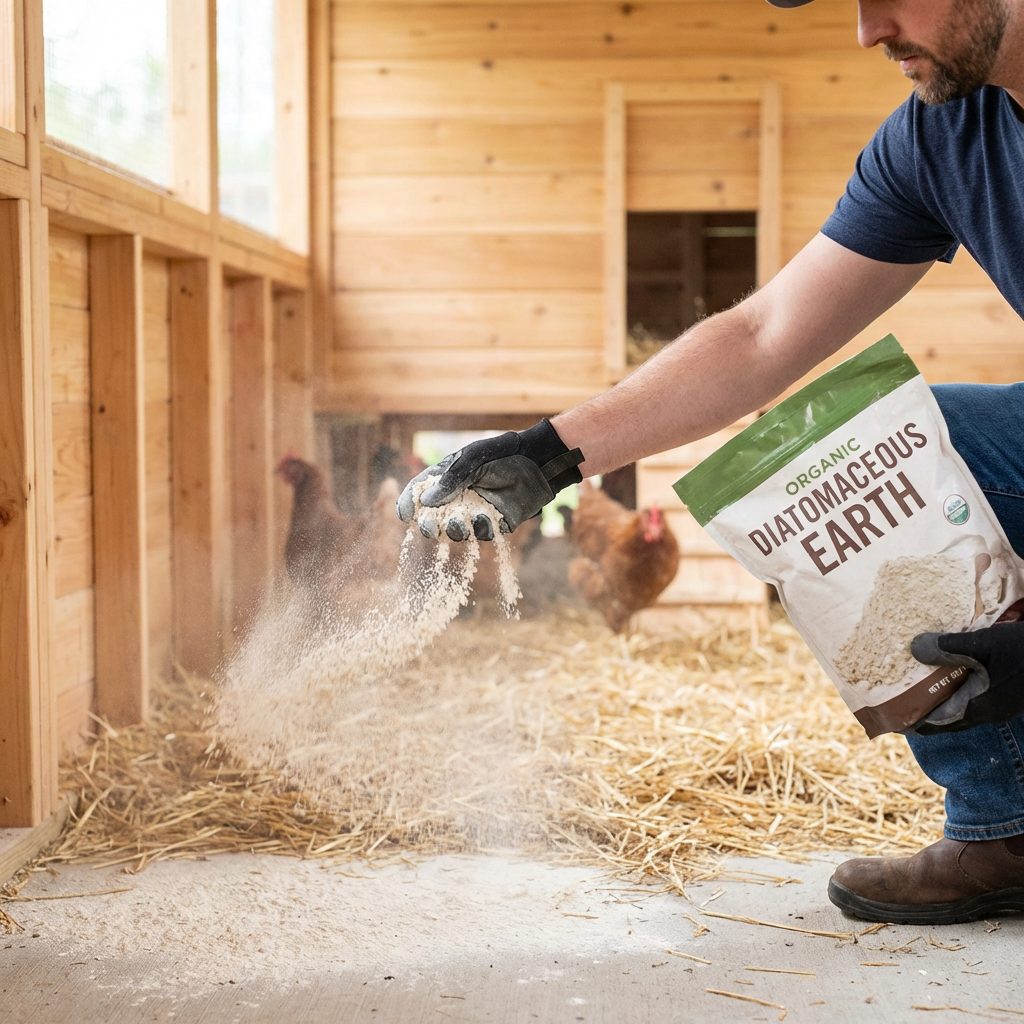
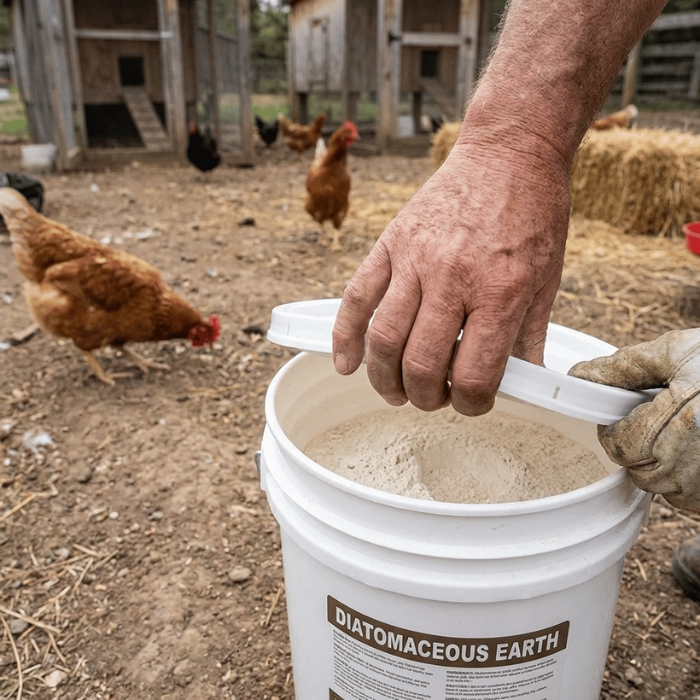
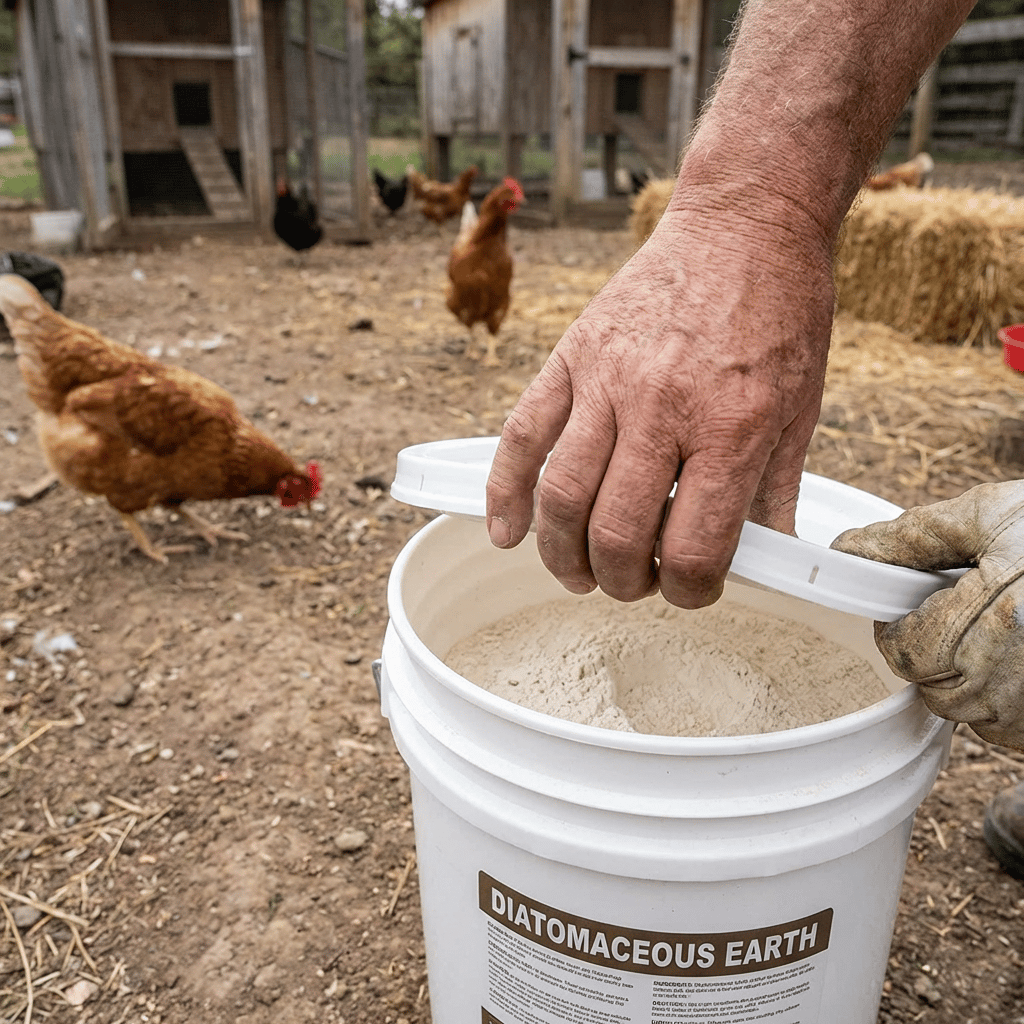
Diatomaceous earth is an environmentally friendly and effective method for treating poultry housing.
Using Diatomaceous Earth in the Chicken Coop – A Detailed Guide
The effectiveness of diatomaceous earth-based protection largely depends on how thoroughly the chicken coop itself is treated. This is especially true in the case of red poultry mites, which spend a significant part of their life cycle not on the birds, but in the environment. For this reason, treating the coop is not just a supplementary step—it is often the most important element of control.
Treating the coop – the most important step
A common mistake is focusing solely on the animals, while most parasites actually hide within the coop itself. If only the chickens are treated, the parasites can quickly reinfest the flock.
For example, red poultry mites:
- hide in cracks and crevices during the day
- emerge at night to feed on blood
- reproduce very rapidly
This means the coop effectively acts as a reservoir, continuously supplying new mites and sustaining the infestation.
How to treat the coop properly
When applying diatomaceous earth, it is not enough to simply “dust” the surfaces. Instead, it must be applied carefully and deliberately to the areas where parasites tend to hide.
Bedding material
Bedding (such as wood shavings or straw) provides an ideal hiding place for red mites, as it is warm, may retain moisture, and is rich in organic material.
How to treat bedding:
- remove the old bedding completely
- before adding fresh bedding, dust diatomaceous earth onto the floor
- apply a light layer of diatomaceous earth on top of the new bedding as well
Nest boxes
Nest boxes are particularly important because they are dark, sheltered, and less frequently disturbed.
How to treat nest boxes:
- apply diatomaceous earth beneath and within the nesting material
- pay special attention to corners and joints
Roosting bars and joints
Roosting bars are one of the main infestation hotspots:
- chickens spend the night here
- mites are most active at night, making these surfaces a critical point of contact
Key areas to treat:
- the underside of the roosting bars
- mounting points and fixtures
- screws, joints, and connection points
Cracks, gaps, and corners
This is the most critical—and most frequently overlooked—area.
Mites particularly favor:
- wall cracks
- wooden joints
- dark corners
Why cracks and gaps matter:
- mites lay eggs in these areas
- they hide here during the day
- they are protected from superficial treatments
How to treat hidden areas:
- thoroughly dust cracks and crevices with diatomaceous earth
- use a brush or powder applicator to improve penetration; very fine, sprayable forms mixed with
- water are also available
- where possible, eliminate cracks and gaps altogether to prevent future hiding places for red mites
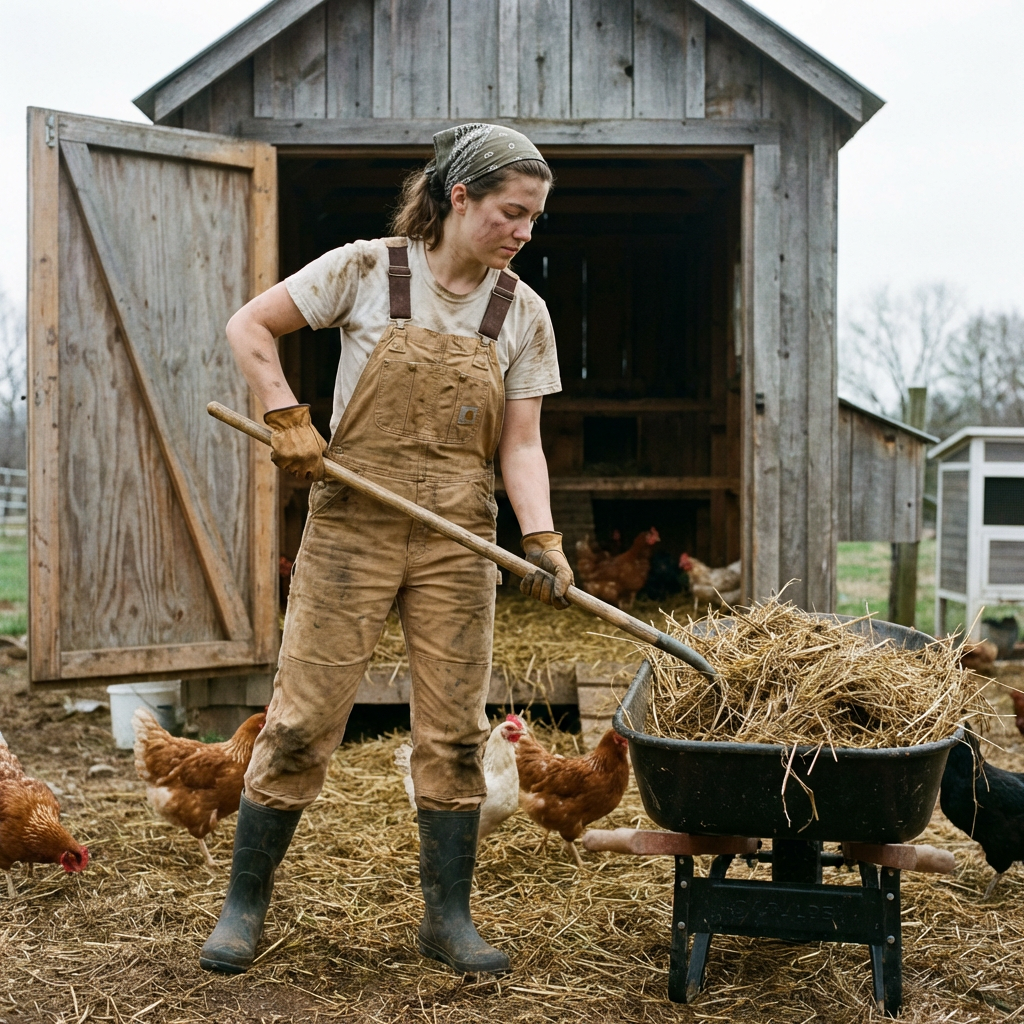
A diatomaceous earth treatment of the coop should always be preceded by a thorough cleaning of the poultry house.
When and How to Use Diatomaceous Earth
One of the most important factors in using diatomaceous earth effectively is proper preparation and timing. The most efficient method always begins with a thorough cleaning, as this ensures that the diatomaceous earth comes into direct contact with the pests rather than being absorbed by dirt and debris.
Recommended steps:
1. Complete and thorough cleaning
Remove old bedding, dust, and manure. These materials can absorb diatomaceous earth and significantly reduce its effectiveness.
2. Mechanical cleaning (scraping, sweeping, washing, steaming)
It is worth removing stubborn dirt as well, especially from corners and joints. The cleaner the surface, the better the result.
3. Application of diatomaceous earth
Only after cleaning should the powder be applied. This ensures it reaches the surfaces and hiding places where parasites are present.
If diatomaceous earth is applied onto dirty or greasy surfaces, it effectively becomes trapped within layers of debris and cannot exert its dehydrating effect. This is one of the most common reasons its effectiveness is underestimated.

Diatomaceous earth treatment should be repeated at regular intervals to maintain its effectiveness.
How Often Should Diatomaceous Earth Treatments Be Repeated?
Diatomaceous earth is not a one-time intervention but rather a regular maintenance tool. The appropriate frequency depends on whether it is being used preventively or to address an existing infestation.
As a preventive measure
A more thorough treatment every 2–4 weeks is generally sufficient to help keep parasite populations under control.
In case of an active infestation
During an outbreak, weekly applications may be necessary, especially in the initial phase of control.
It is important to understand that diatomaceous earth does not destroy insect eggs. For this reason, repeated application is required to target newly hatched individuals. A lack of consistency often leads to the problem returning, even if initial improvement is observed.
The importance of a dry environment
The effectiveness of diatomaceous earth is closely linked to moisture levels. The material only works properly in a dry state, as this is when it can damage pests’ bodies and absorb moisture from them.
It is important to ensure that:
- the coop does not become wet (roof and walls should be in good condition)
- proper ventilation is maintained
- long-term high humidity does not develop
In humid conditions:
- diatomaceous earth clumps together
- it loses its fine, porous structure
- its effectiveness is significantly reduced or eliminated
For this reason, maintaining dry conditions is especially important during rainy periods or in poorly insulated coops. In many cases, improved ventilation alone can significantly enhance the effectiveness of parasite control.
Common Mistakes When Using Diatomaceous Earth in Poultry Housing
Many negative experiences with diatomaceous earth do not stem from the product itself, but from improper use. Several common mistakes can significantly reduce its effectiveness.
Superficial application: If the powder remains only on surface areas, it does not reach the pests’ hiding places.
- Missing cracks and crevices: These are among the most important refuges, especially for mites.
- Infrequent application: Repeated use is necessary to interrupt the pests’ life cycle.
- Use in damp environments: In such conditions, diatomaceous earth is essentially ineffective.
- Applying without prior cleaning: Dirt and debris can absorb the powder, preventing it from working properly.
These mistakes can easily lead to the impression that diatomaceous earth is ineffective, when in reality the issue lies in unsuitable application conditions.
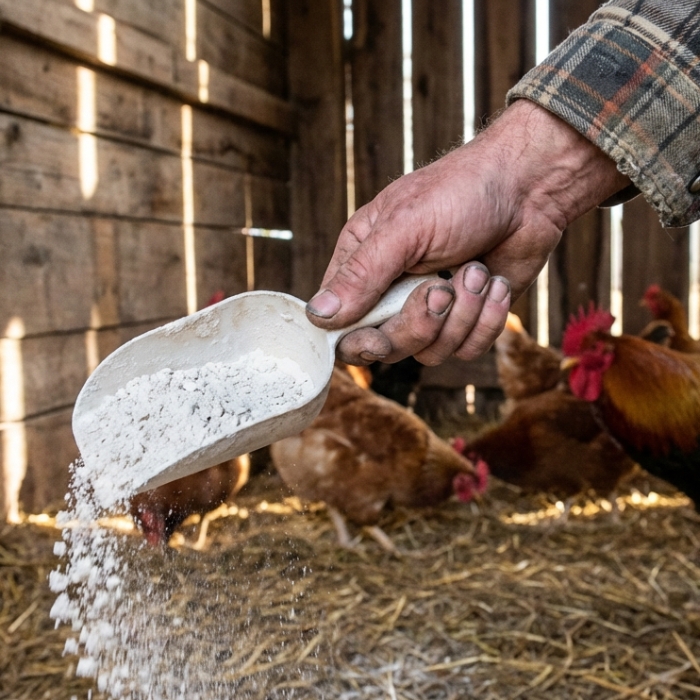
In a damp environment, diatomaceous earth clumps together and becomes less effective.
Why Repeated and Thorough Coop Treatment Is Important
Consistent and thorough treatment of the chicken coop is effective because it targets not only the parasites currently present, but also interrupts their entire life cycle. This is especially important because many species—such as red poultry mites—spend most of their time not on the birds themselves, but in the environment.
By treating the coop, you:
- interrupt the reproductive cycle of parasites
- reduce reinfestation pressure
- achieve more stable long-term results
This approach is not merely a “symptom treatment,” but one that addresses the root of the problem. When applied consistently, diatomaceous earth becomes not just a one-time solution, but the foundation of a sustainable long-term pest control strategy.
How to use diatomaceous earth safely
Although diatomaceous earth is a natural substance, it is not entirely risk-free. Due to its very fine, powdery texture, inhalation is the primary concern, so careful handling is always recommended.
The most important precaution is to avoid inhaling the dust. Diatomaceous earth consists of extremely fine particles that can easily become airborne and may irritate the respiratory tract and lungs if inhaled. This is especially relevant in enclosed spaces or when applying larger amounts. For this reason, wearing an FFP2 mask is recommended, along with ensuring proper ventilation so that airborne dust disperses quickly.
Eye protection is also important. Fine particles can cause irritation if they come into contact with the eyes, particularly during application when dust is present in the air. It is therefore advisable to prevent dust from reaching the face, and the use of protective goggles may also be appropriate.
Care should also be taken around animals. Diatomaceous earth should not get directly into chickens’ eyes or airways, as it may cause irritation. In addition, more is not necessarily better: excessive application does not improve effectiveness but may unnecessarily burden both animals and the environment. Moderate, targeted use is always the safer and more effective approach.
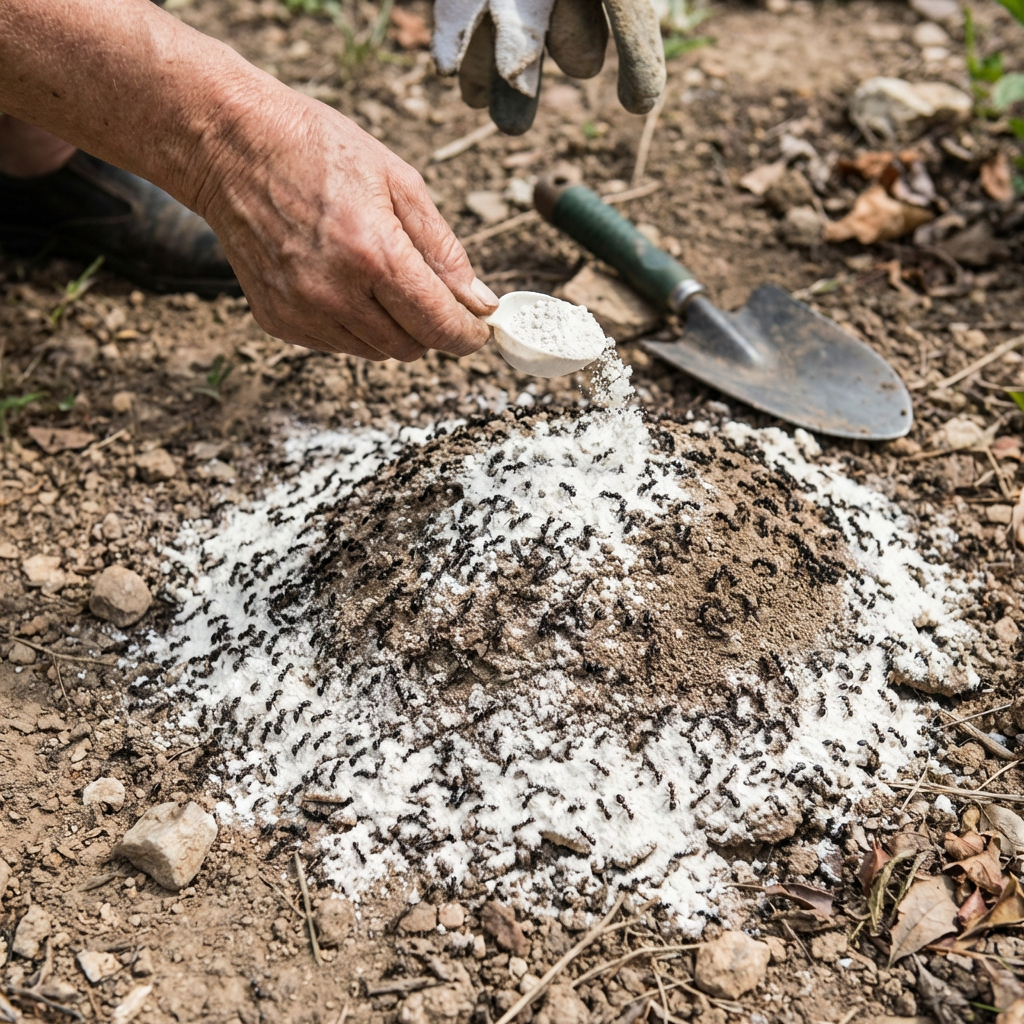
Diatomaceous earth has also proven effective against garden pests.
Other Uses of Diatomaceous Earth in the Home and Garden
1. Indoor insect control
Diatomaceous earth can also be useful in the home as a natural insect control solution, especially in places where chemical products are not desirable. It can be effective against ants and cockroaches, and it may also be used as a supplementary treatment for bed bug infestations. Its mode of action remains the same: it damages the insects’ bodies and ultimately causes them to dehydrate.
When applying it indoors, it is important not to use thick layers. Instead, it should be spread very thinly—almost invisibly—primarily in areas where insects are likely to travel. These include along baseboards, around doors and windows, and in wall cracks. In this way, insects pass through the powder, allowing it to work effectively without becoming noticeable or disruptive in the living space.
2. Deodorizing and moisture absorption
Diatomaceous earth is not only useful against insects; its excellent moisture-absorbing properties also make it suitable for deodorizing purposes. It can be used in shoes, closets, or even at the bottom of trash bins, where it helps reduce unpleasant odors.
Its mechanism is simple: thanks to its porous structure, it absorbs moisture, which is often the primary cause of odor formation. By reducing humidity, it also limits the growth of odor-causing bacteria. This provides a natural, chemical-free way to keep enclosed spaces fresher.
3. Use around pets
Diatomaceous earth can also be used in the environment of pets, for example in bedding areas or near litter, where it may help reduce fleas and other small parasites. In these cases, the focus is on treating the environment rather than applying the substance directly to the animal.
However, caution is essential: it should always be used in small amounts, and dust should be prevented from becoming airborne so that animals do not inhale it. Excessive use is not beneficial, so regular but moderate application is recommended.
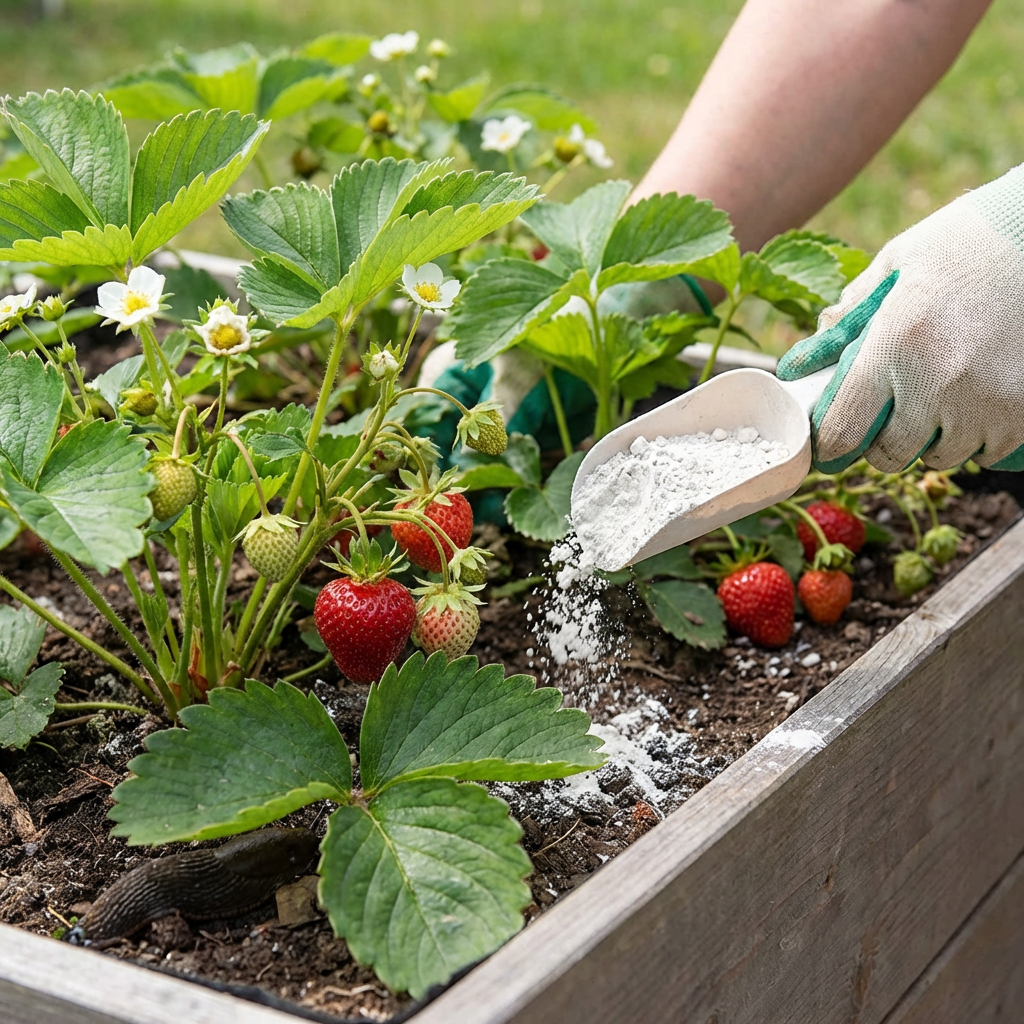
Sprinkling diatomaceous earth around your crops can help protect them from slugs and caterpillars.
4. Natural Pest Control in the Vegetable Garden
In the garden, diatomaceous earth can be a simple and environmentally friendly solution against various pests. It can be effective against aphids, small beetles, caterpillars, and slugs, especially when they come into direct contact with the powder. Its plant protection effect is also based on physical dehydration, meaning it does not burden plants with chemical substances.
Diatomaceous earth should always be applied in dry weather, as moisture reduces its effectiveness. It should be spread in a thin layer on plant leaves and soil surfaces, particularly in areas where pests are present.
It is important to repeat the treatment after rain or heavy watering, as water can wash away the powder. For this reason, it is better to work with smaller amounts applied regularly rather than large quantities applied once.
5. Soil improvement effect
Diatomaceous earth is not only useful for pest control but may also have a positive impact on soil quality. It can help improve soil structure, especially in soils that are either too loose or too compact. It may also contribute to better water retention, which is particularly beneficial during dry periods.
This effect is most noticeable in sandy soils, where water drains quickly. The fine structure of diatomaceous earth helps retain moisture, allowing plants to access water for longer periods.
Diatomaceous earth is not a miracle solution – but a highly useful tool
It works best when:
- used consistently
- combined with other methods
- applied under suitable conditions
Its greatest advantage is its natural and versatile nature: it is useful not only in the chicken coop, but also in the household and garden. Diatomaceous earth is an ingredient worth keeping on hand both in the poultry yard and around the home.