Why Is Cryptosporidiosis Such a Serious Problem?
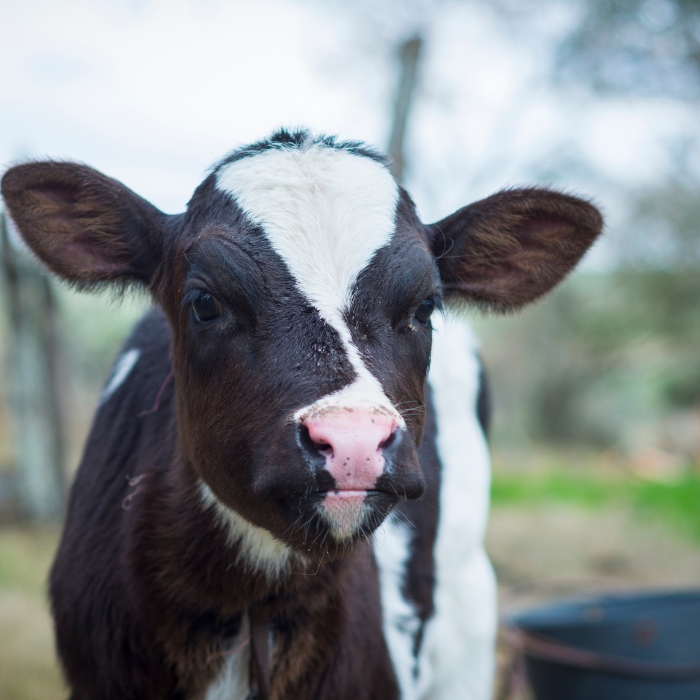
Cryptosporidiosis is caused by the protozoan parasite Cryptosporidium parvum. The pathogen primarily affects newborn calves and animals only a few weeks old, a period when their immune systems are still developing and they are particularly vulnerable to infection.
The parasite colonizes the surface of epithelial cells in the small intestine, damaging the intestinal villi. These microscopic structures are responsible for nutrient absorption, so their destruction directly impairs intestinal function. As a result, the absorption of water and nutrients decreases, fluid loss increases, and the characteristic watery diarrhoea develops.
One of the greatest challenges posed by Cryptosporidium is its exceptional resilience. Its infectious forms, known as oocysts, are already infective when excreted and can survive for months under favourable environmental conditions. Furthermore, they are resistant to many disinfectants, allowing infection pressure to persist on farms.
The parasite’s location also complicates control efforts. Because it resides on the surface of intestinal epithelial cells, it is partially protected from both the immune system and many conventional treatments.

The pathogen primarily affects newborn calves and calves only a few weeks old, when their immune systems are still developing.
Economic Losses Extend Far Beyond Mortality
When discussing cryptosporidiosis, mortality rates often receive the most attention. However, experts increasingly agree that the greatest economic losses stem not from death but from impaired growth and development.
With proper care, most of the infected calves survive the disease, but intestinal damage can have long-lasting consequences. Affected animals grow more slowly, utilize feed less efficiently, and frequently lag behind healthy peers for weeks.
A healthy calf may achieve daily weight gains of up to 0.8 kg, whereas growth rates in calves recovering from diarrhoea may decline by 30–40%. Within just a few weeks, several kilograms of weight difference can accumulate, affecting performance throughout the entire rearing period.
Additional costs arise from increased labour requirements, veterinary treatments, rehydration therapy, and the expenses associated with extended rearing periods. Cryptosporidiosis is therefore not only a health issue but also a major economic concern.
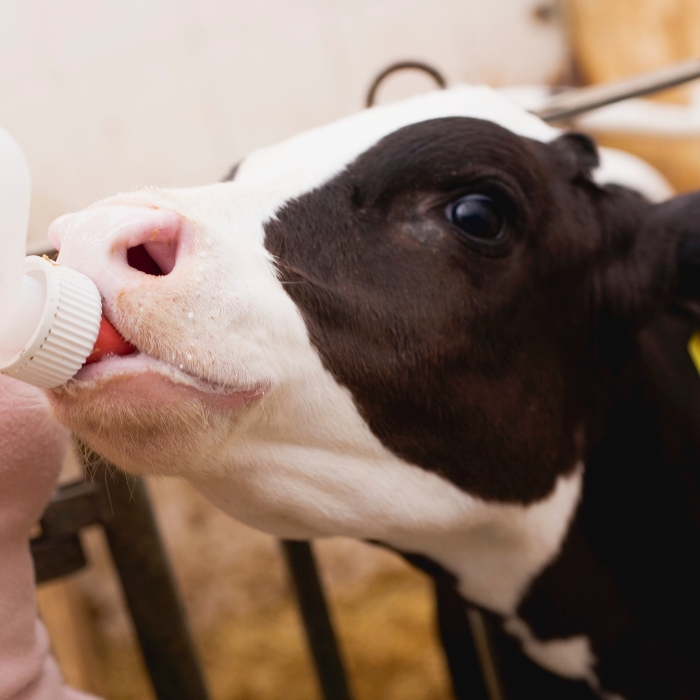
The greatest economic losses are caused not by mortality, but by reduced growth performance.
A Severe Farm Outbreak Led to the Study
The study originated from a significant diarrhoea outbreak that occurred in July 2025 on a cattle farm in Csongrád County, Hungary, affecting calves between 7 and 10 days of age.
Several calf deaths further worsened the situation. Although modifying the antibiotic protocol reduced clinical severity, the frequency of illness remained virtually unchanged, with morbidity still approaching 100%.
Under the direction of veterinarian Dr. Nelli Motyovszki, the farm initiated a comprehensive laboratory investigation and field trial to identify the pathogens involved and compare commercially available solutions for controlling cryptosporidiosis.
What Did the Laboratory Results Reveal?
Analysis of 111 faecal samples collected between July 2025 and February 2026 illustrated the complexity of the problem.
Cryptosporidium infection was detected in 65% of samples, while Clostridium positivity reached 85%. E. coli was identified in 21% of the samples, and no other major parasitic infections were detected.
The results demonstrated that many diarrheic calves were simultaneously infected with multiple pathogens. This is particularly important because, in practice, clinical disease is rarely caused by a single pathogen alone.
One of the most significant findings was that approximately 42% of cases exhibited severe Clostridium infection despite low or even negative Cryptosporidium levels. This suggests that intestinal microbial balance plays a role at least as important as the parasite itself in disease development.
Study Design
The trial included eight groups—seven treatment groups and one control group—with ten calves per group.
The products evaluated included:
- Conventional pharmaceutical treatments
- Paromomycin-based therapies
- Herbal formulations
- A vaccine targeting Cryptosporidium
- Various gut-health-supporting products
Researchers also ensured that the calves had adequate immune status. Colostrum assessments produced excellent results, and serum Brix measurements showed that more than 96% of calves had achieved adequate passive immunity. This was important because it minimized the influence of poor colostrum management on the study outcomes.
Results of the First Sampling
Initial feacal examinations suggested that several products showed promise.
Halofusol demonstrated particularly favourable short-term effects against Cryptosporidium, and no heavily infected animals were observed within the treated group.
By contrast, several other products produced less convincing results. At this early stage, LIQ-BIOTIC did not appear to offer a clear advantage over competing products.
However, the first sampling represented only a snapshot in time. Researchers were far more interested in determining which products could deliver sustainable long-term results.
Long-Term Results Determined the Winner
The second round of sampling marked the true turning point of the study.
Several products that initially performed well lost their advantage. Infection levels began to rise again in some groups, while others showed little further improvement.
LIQ-BIOTIC, however, produced a very different outcome. In the high-dose treatment group, not a single Cryptosporidium-positive calf was detected during the second sampling. Infection prevalence dropped to 0%, achieving complete negativity.
This was not only the best result observed in the study but also indicated that the product’s effect was not merely temporary and could be sustained over time. From a practical farm-management perspective, this is highly significant.
One of the greatest challenges in controlling Cryptosporidium is the constant risk of reinfection due to the continuous environmental presence of oocysts. Therefore, solutions that provide lasting protection are especially valuable for farmers.
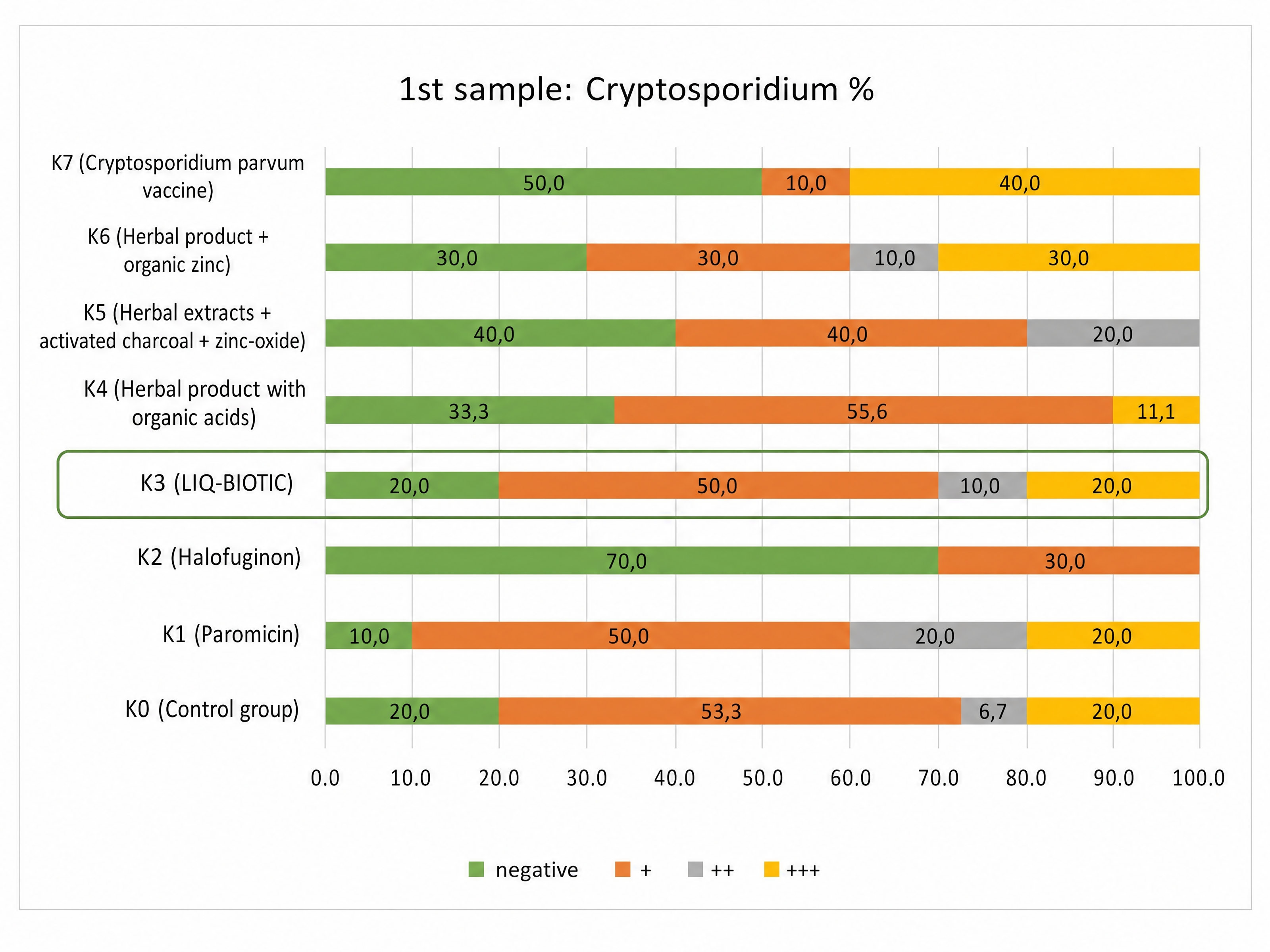
At the initial stage of the trial, alternative products such as the herbal drinking solution LIQ-BIOTIC did not yet show a significant advantage compared with the other treatments.
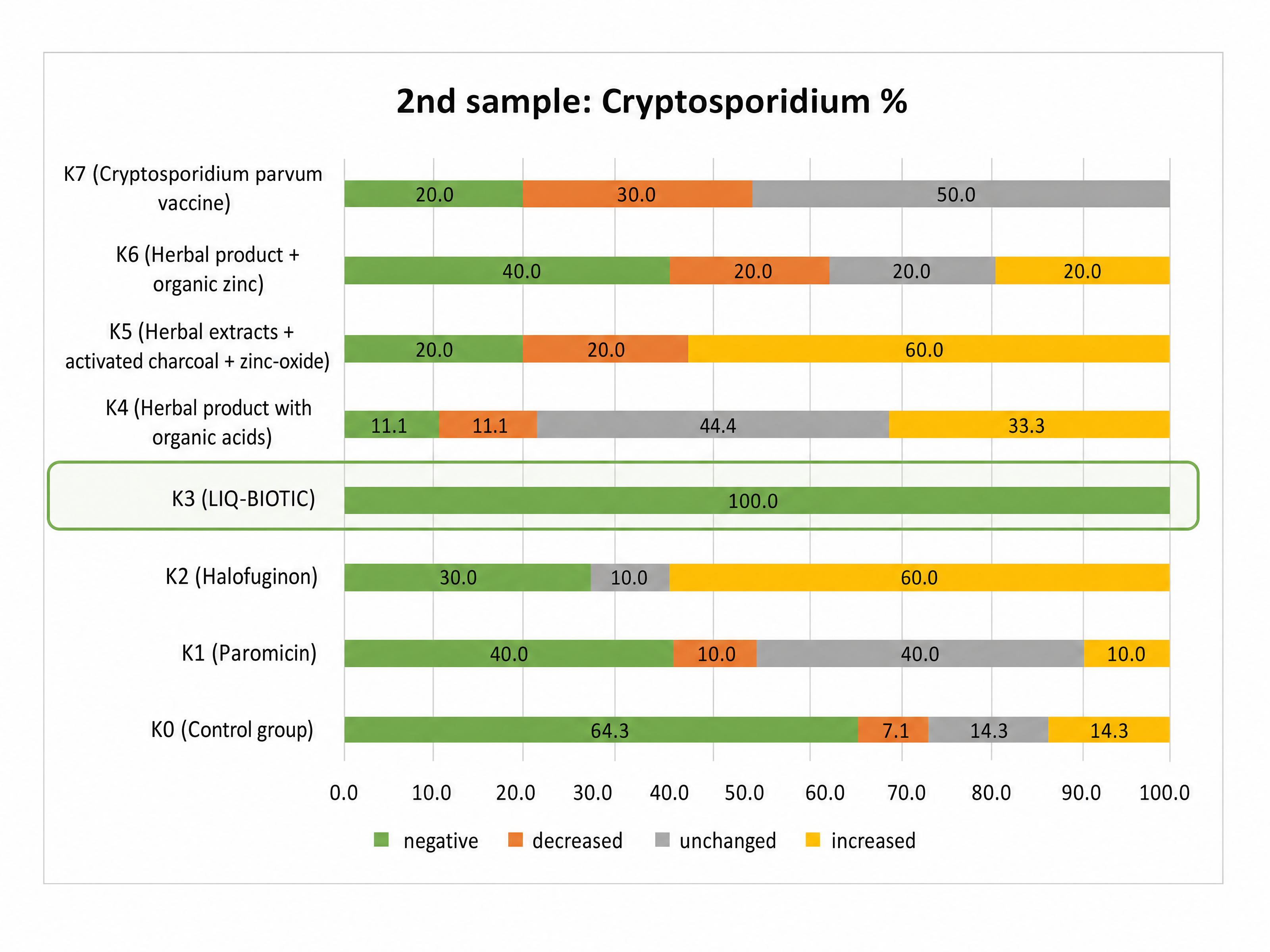
The results of the second sampling clearly demonstrated LIQ-BIOTIC's superior long-term effectiveness in reducing Cryptosporidium infection compared with the other treatments.
Positive Effects on Clostridium Infection
Another noteworthy finding involved Clostridium infection levels.
According to the second sampling, only two products showed clearly favourable effects in this area: COCCILIQ and LIQ-BIOTIC.
This finding is particularly important because one of the study’s central conclusions was that diarrheal disease cannot be attributed solely to Cryptosporidium.
LIQ-BIOTIC therefore proved effective not only in reducing a specific pathogen but also in supporting overall intestinal balance.
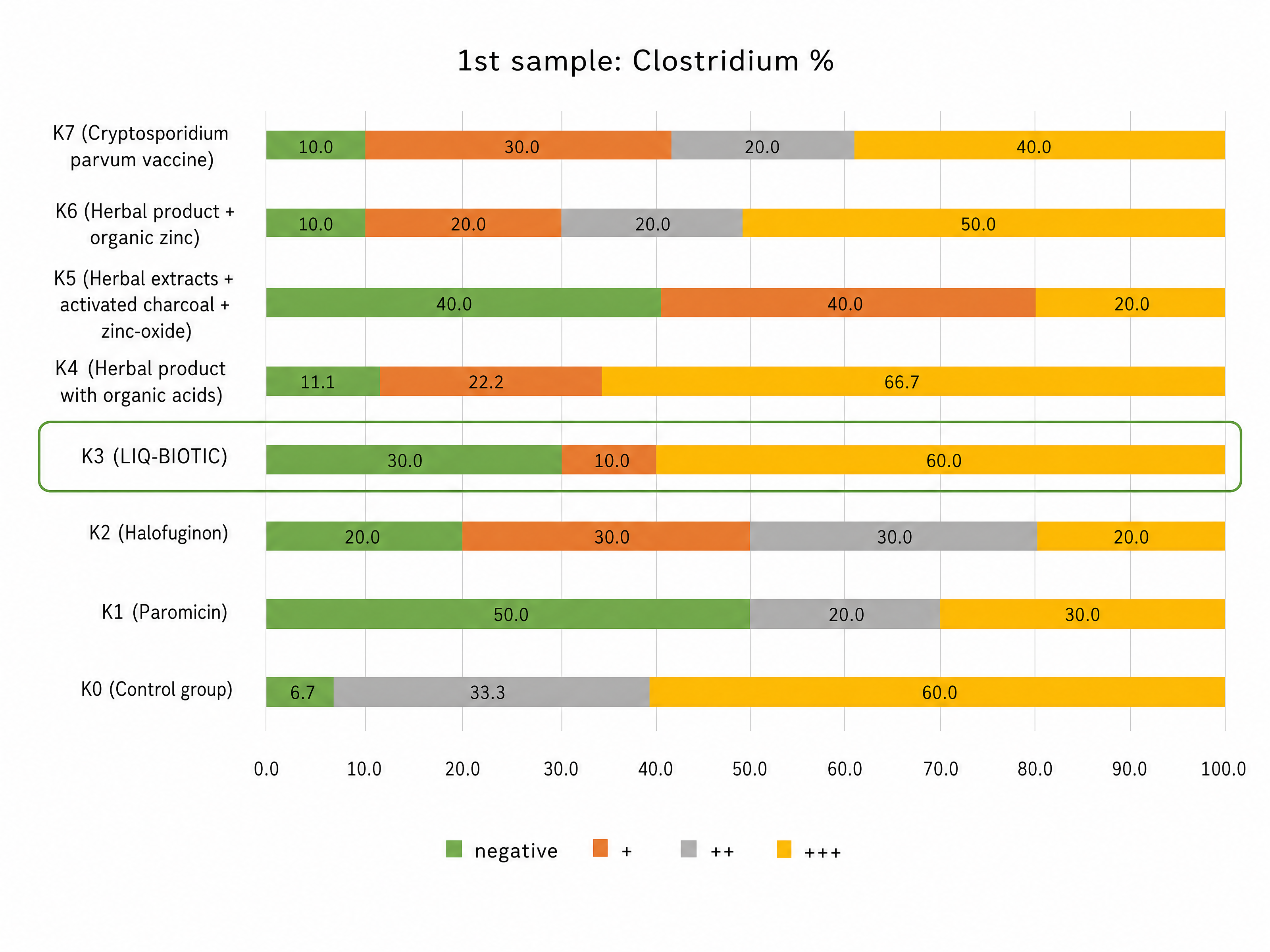
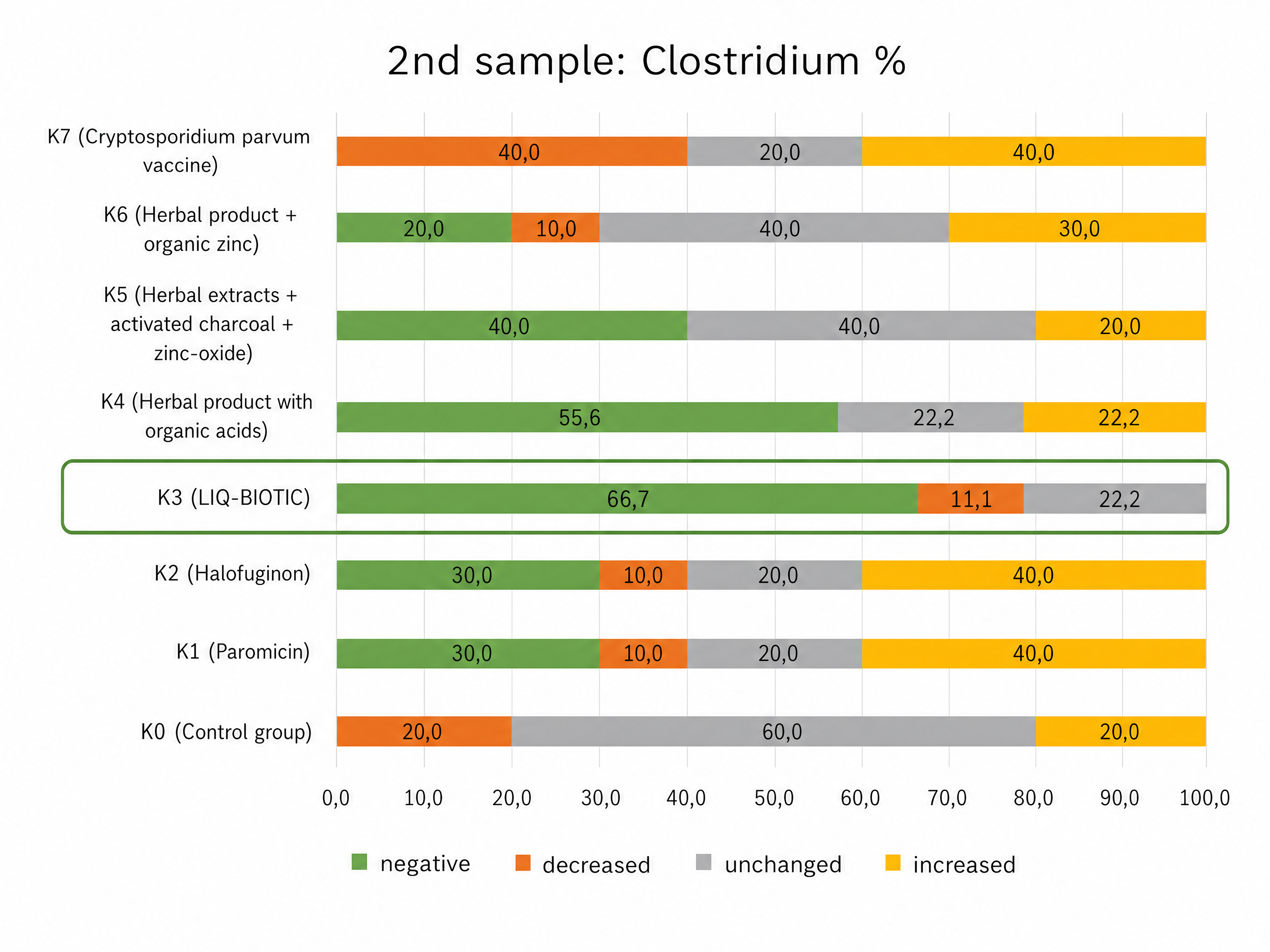
In addition to its effects on Cryptosporidium, LIQ-BIOTIC proved highly effective in controlling Clostridium infection, outperforming the other products tested.
Why Does This Matter in Practice?
Maintaining gastrointestinal health has become an increasingly important priority in modern livestock production.
It is now well established that gut microbiota influence not only digestion but also immune function, growth performance, and resistance to infectious disease.
A product that simultaneously supports intestinal balance and helps reduce infection pressure can provide substantial benefits during calf rearing.
According to farm experience, LIQ-BIOTIC appears to offer exactly these advantages.
The Key Message of the Study
One of the most important lessons from this research is that successful control of calf diarrhoea cannot rely on combating a single pathogen alone.
While Cryptosporidium is undoubtedly a major contributor, intestinal health, microbial balance, Clostridium infection status, and effective farm management are all critical factors.
Only a combination of good hygiene practices, proper colostrum management, sound herd management, and targeted supportive products can deliver sustainable long-term results.
Conclusion
This field study clearly demonstrates the complex challenge that cryptosporidiosis presents in modern cattle production. The disease causes not only diarrhoea but also significant economic losses through reduced growth, poorer feed efficiency, additional treatments, and extended rearing periods. At the same time, the results show that effective solutions are available to help reduce infection pressure.
Among all products evaluated in this trial, LIQ-BIOTIC delivered the strongest overall performance. The 100% Cryptosporidium-negative outcome achieved in the high-dose treatment group was particularly impressive, while the product also showed beneficial effects on Clostridium infection levels. Owing to these highly convincing results, the farm incorporated LIQ-BIOTIC into its standard treatment protocol.
Based on field experience, LIQ-BIOTIC may provide cattle producers with an effective tool for supporting calf intestinal health, reducing infection pressure, and ultimately mitigating the long-term economic impact of cryptosporidiosis.
 Spend at least 25,000 HUF and enjoy
 For our human health products, visit our